
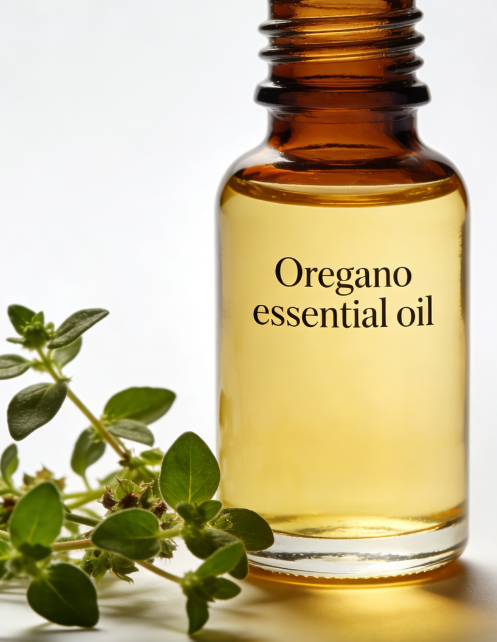
Oregano essential oil is a powerful oil steam-distilled from the leaves and flowers of Origanum vulgare, a member of the Lamiaceae family. With its warm, spicy, and slightly herbaceous aroma, this oil has been used in traditional medicine for thousands of years and is often hailed as “nature’s antibiotic.” Modern research continues to unveil the science behind its robust biological activity.
Botanical Background and Geographical Specificity
True oregano essential oil primarily originates from the Mediterranean region, specifically from wild or organically cultivated varieties in Greece and Turkey. Its quality and chemical composition are deeply influenced by altitude, soil, and climate. It is important to note that the commonly marketed “oregano oil” may sometimes be confused with related plants (such as marjoram), making the Latin name Origanum vulgare crucial for ensuring authenticity.
Core Chemical Composition: The Secret to Its Potency
The remarkable efficacy of oregano essential oil stems from its high concentration of phenolic compounds:
Carvacrol: Comprising 60–80%, this is the primary active component, offering potent antibacterial, antifungal, and antioxidant properties.
Thymol: Typically accounting for 5–10%, it also exhibits significant antimicrobial and anti-inflammatory effects.
γ-Terpinene and p-Cymene: These monoterpenes contribute to its distinctive aroma and offer synergistic benefits.
Other Trace Components: Including linalool and terpinene, which together form its complex chemical profile.
This unique combination of compounds, particularly the high concentration of carvacrol, grants oregano essential oil unparalleled broad-spectrum microbial inhibitory capabilities.
Research-Backed Health Benefits and Applications
1. Powerful Immune and Respiratory Support
Natural Antimicrobial Agent: Numerous in vitro studies demonstrate oregano oil’s significant inhibitory effects against various bacteria (including some drug-resistant strains) and fungi (such as Candida albicans).
Respiratory Guardian: Its volatile properties help alleviate seasonal respiratory discomfort. When diluted and applied to the chest or soles of the feet, or used in steam inhalation, it provides soothing support.
Immune Activation: Traditionally used to offer additional support to the immune system during seasonal transitions or when feeling under the weather.
2. Digestive Health and Gut Balance
Gut Microbiota Modulation: Its antimicrobial properties may help maintain a healthy balance of gut flora.
Digestive Aid: Traditionally used to relieve occasional bloating and indigestion (requires professional guidance for very low-dose internal use).
3. Antioxidant and Anti-Inflammatory Support
Combating Oxidative Stress: Carvacrol and thymol are effective free radical scavengers.
Relieving Localized Inflammation: When highly diluted, it can be used in topical massage to address occasional muscle or joint discomfort.
4. Natural Cleaning and Household Applications
Surface Cleaning: Adding it to homemade cleaners enhances their cleansing and purifying capabilities.
Air Purification: Diffusing it helps freshen indoor air (use with caution due to its strong aroma).
Safe Usage Guidelines: Balancing Potency and Caution
Oregano essential oil is one of the most potent essential oils and must be used with great care.
Key Safety Guidelines:
Must Be Highly Diluted: For topical use, extremely low concentrations are recommended (typically 0.5%–1%, i.e., 1–2 drops per 10 ml of carrier oil). Always perform a patch test before first use.
Avoid Prolonged Continuous Use: Short-term, intermittent use is advised—for example, one week on followed by one week off.
Internal Use Requires Extreme Caution: Should only be undertaken under the explicit guidance and supervision of a qualified aromatherapist or physician, using 100% pure, therapeutic-grade oil suitable for internal use and administered via safe methods such as special capsules.
Contraindications for Specific Groups: Pregnant or breastfeeding women, infants and young children, individuals with epilepsy, and those with severe liver conditions should avoid use.
Potential Side Effects:
Skin irritation: May cause irritation even when diluted, particularly for sensitive skin.
Mucous membrane irritation: Avoid contact with sensitive areas such as the eyes and inner nasal lining.
Drug interactions: May affect blood clotting or interfere with the metabolism of certain medications.
Quality Identification and Selection
Latin Name: Ensure the label specifies Origanum vulgare.
Chemical Composition: Prioritize products that clearly state carvacrol and thymol content (e.g., “carvacrol content >70%”).
Plant Part: Should indicate “flowering tops” or “leaves.”
Origin: Oils from Mediterranean regions (e.g., Crete, Greece) are typically of higher quality.
Packaging: Stored in dark glass bottles away from light.
Practical Blends and Application Examples
1. Household Purifying Spray:
Add 10 drops of oregano essential oil and a small amount of dispersant (such as vodka) to 100 ml of water. Shake well and use for surface spraying and cleaning.
2. Seasonal Support Blend Massage Oil (1% Dilution):
Add 1 drop of oregano oil, 2 drops of eucalyptus oil, and 2 drops of tea tree oil to 10 ml of carrier oil (such as coconut oil). Mix and use for chest or back massage.
3. Foot Care:
Add 2–3 drops of oregano essential oil (first dispersed in whole milk or shower gel) to foot bath water to help maintain foot cleanliness.
Scientific Perspectives and Future Directions
Current research is delving deeper into the potential of oregano oil’s active components:
Combating Antibiotic Resistance: Studying its synergistic effects with conventional antibiotics.
Food Preservation: Exploring its prospects as a natural preservative.
Plant Defense Mechanisms: Learning from its allelopathic properties.
Conclusion: Respecting Nature’s Potent Power
Oregano essential oil is a powerful “double-edged sword” in nature’s pharmacy. It carries ancient Mediterranean wisdom, and its robust antimicrobial and antioxidant properties are supported by modern science. However, its very potency demands knowledge and reverence from users.
For those seeking natural ways to support immune and respiratory health, oregano oil can be a valuable tool when used with a thorough understanding of safety protocols. Nevertheless, it should never replace professional medical advice or treatment. When incorporating oregano essential oil into a wellness routine, always adhere to the principle of “less is more,” prioritize high-quality products, and seek professional consultation when necessary—thus harnessing this powerful gift from the Mediterranean hillsides.
Obtain GC-MS Certified High-Quality Oregano Essential Oil
We provide oregano essential oil with clearly stated carvacrol content and traceable origins. For technical reports, safety data sheets, or professional application consultations, please contact us. We strongly recommend seeking professional guidance for product development or personal use.

Leave A Comment