
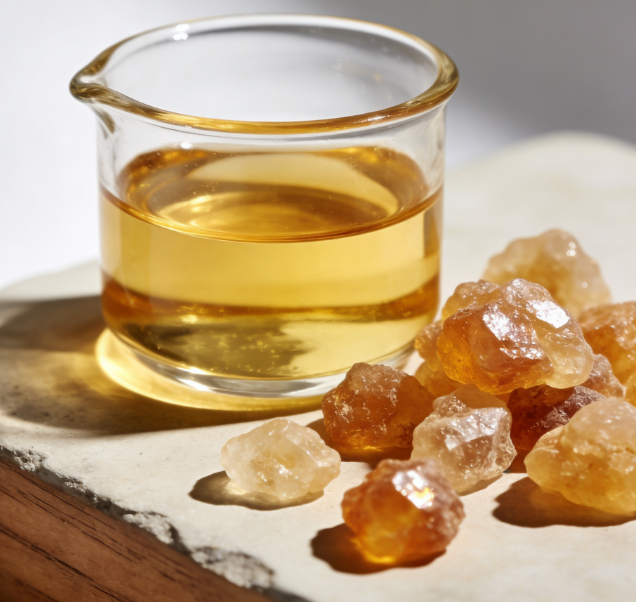
Frankincense essential oil, distilled from the resin of the ancient Boswellia tree, carries a history as rich as human civilization itself. Revered as “liquid gold,” this oil has served not only as a sacred offering in religious ceremonies but also as a cornerstone in traditional healing systems. Today, modern scientific research is gradually uncovering the scientific principles behind its millennia-old wisdom.
Historical Origins and Cultural Significance
Frankincense primarily originates from the arid regions of the Horn of Africa, the Arabian Peninsula, and the Indian subcontinent. The ancient Egyptians used it to create embalming agents and cosmetics; in the East, it was employed in Ayurvedic and Traditional Chinese Medicine to treat arthritis, digestive issues, and skin disorders. Its English name, “Frankincense,” derives from the medieval French phrase “franc encens,” meaning “pure incense.”
Key Chemical Composition
The unique efficacy of frankincense essential oil stems from its complex chemical profile:
Monoterpenes: Such as α-pinene and limonene, known for their cleansing and uplifting properties.
Sesquiterpenes: Including incensole acetate, which research suggests may support neurological and emotional well-being.
Boswellic Acids: Particularly in resin-derived extracts, recognized for their anti-inflammatory properties.
Esters and Alcohols: Contributing to its balancing and soothing effects.
Therapeutic Properties and Modern Applications
1. Emotional and Spiritual Well-being
Meditation Aid: Its earthy, calming aroma helps quiet the mind and deepen spiritual practice.
Stress Relief: May help reduce cortisol levels and promote relaxation.
Mood Enhancement: Often used in aromatherapy to alleviate anxiety and uplift the spirit.
2. Skin Health and Beauty
Anti-aging: Supports skin elasticity and may reduce the appearance of fine lines.
Skin Regeneration: Promotes healing of minor wounds, scars, and blemishes.
Complexion Improvement: Balances oily skin and soothes irritation.
3. Respiratory Support
Congestion Relief: Helps clear respiratory pathways when diffused or applied topically (diluted).
Soothing Effect: Calms coughs and supports comfortable breathing during seasonal changes.
4. Musculoskeletal Comfort
Joint and Muscle Support: When diluted and applied topically, it may ease discomfort associated with exercise or tension.
Anti-inflammatory Action: Its compounds may help reduce localized inflammation.
Quality and Purity: A Critical Distinction
Not all frankincense oils are created equal. Key factors determining quality include:
Species Source: Boswellia sacra (Omani), Boswellia carterii, and Boswellia serrata are most common, each with slightly different properties.
Harvesting Method: Sustainable, ethical tapping of the tree resin is crucial for both tree health and oil quality.
Distillation Process: Low-temperature, slow steam distillation preserves delicate therapeutic compounds.
Purity: Pure, unadulterated oil should contain no synthetic additives or carrier oils.
Safe Usage Guidelines
Topical Application:
Always Dilute: Mix with a carrier oil (like jojoba or coconut) at 1-3% concentration for skin application.
Patch Test: Check for sensitivity on a small area before widespread use.
Avoid Sensitive Areas: Keep away from eyes, inner ears, and broken skin.
Aromatic Use:
Diffusion: 3-5 drops in a diffuser for 30-60 minutes at a time.
Direct Inhalation: 1-2 drops on a tissue or palm, inhaled deeply.
Internal Use:
Caution Advised: Should only be undertaken with 100% pure, therapeutic-grade oil and under the guidance of a qualified professional.
Not for Children: Generally not recommended for young children or pregnant/nursing women without professional consultation.
Scientific Research and Future Potential
Modern studies are exploring frankincense’s potential in areas such as:
Cellular Health: Preliminary research on boswellic acids and cellular function.
Immune Modulation: Investigating its influence on immune response.
Neurological Support: Studying incensole acetate’s effects on mood and memory pathways.
While traditional use provides a strong foundation, ongoing clinical research continues to shape our understanding of its full therapeutic scope.
Integration into Daily Life
Simple Rituals for Modern Living:
Morning Focus: Add to a diffuser during meditation or work to enhance concentration.
Skincare Serum: Blend 2-3 drops with facial oil for nightly application.
Post-Exercise Recovery: Mix with a carrier oil for a soothing muscle massage.
Travel Companion: Use on a cotton ball for a calming scent in unfamiliar environments.
Sustainability and Ethical Considerations
With growing demand, sustainable sourcing is paramount:
Support Ethical Harvesters: Choose brands that work directly with harvesters and support fair trade.
Tree Conservation: Look for companies involved in Boswellia tree replanting initiatives.
Cultural Respect: Purchase from sources that honor the traditional knowledge and communities behind frankincense.
Conclusion
Frankincense essential oil represents a beautiful confluence of ancient tradition and contemporary wellness science. Its multifaceted applications—from enhancing spiritual practice to supporting skin health—make it a uniquely versatile addition to both aromatherapy and natural health regimens. As with any potent botanical, mindful sourcing, proper usage, and respect for its traditional origins are key to experiencing its full benefits. This ancient resin, transformed into golden oil, continues to offer its gifts to those seeking natural pathways to balance and well-being.
Discover Premium Frankincense Essential Oil
Experience the purity of traditionally harvested, carefully distilled frankincense oil. Contact us for samples, GC-MS reports, and formulation guidance to incorporate this timeless botanical into your wellness products.

Leave A Comment