
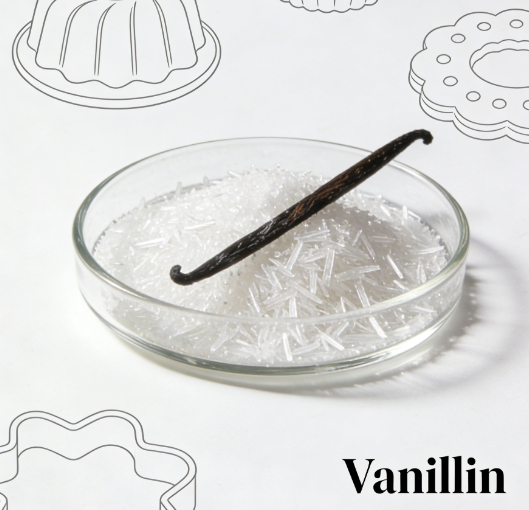
Vanillin, chemically known as 4-hydroxy-3-methoxybenzaldehyde, is the most iconic aromatic compound in vanilla flavoring. Although its name is often associated with synthetic fragrances, natural vanillin is actually widely present in vanilla beans, benzoin resin, and even some grain crops—truly an aromatic miracle bestowed by nature.
History and Evolution of Sources
The discovery and application of vanillin trace back to the mid-19th century. Initially, it was extracted exclusively from vanilla beans, making it an extremely expensive spice. In 1874, German scientists successfully synthesized vanillin from coniferin, marking the beginning of industrial production. Today, vanillin is sourced through three main pathways: natural extraction, semi-synthesis, and full chemical synthesis, with each method having distinct characteristics and applications.
Chemical Properties and Sensory Profile
Molecular Formula: C₈H₈O₃
Appearance: White to pale yellow needle-like crystals
Melting Point: 81–83°C
Solubility: Soluble in ethanol, propylene glycol, and oils; slightly soluble in water
Aroma Characteristics: Sweet, creamy, warm vanilla notes with a faint woody undertone
Flavor Threshold: Approximately 20–30 ppm (in water)
Natural Sources and Biosynthesis
Primary Natural Sources:
Vanilla Beans (Vanilla planifolia): Contains 1–3% vanillin, along with over 200 other aromatic compounds
Benzoin Resin: Rich in natural vanillin
Rice Bran: Contains trace amounts of vanillin precursors
Certain Fermented Foods: Such as aged soy sauce and whiskey
Biosynthetic Pathways:
In vanilla beans, vanillin is biosynthesized from phenylalanine
Key enzymes include phenylalanine ammonia-lyase (PAL) and vanillin synthase
The biosynthesis process takes 6–9 months, influenced by factors like cultivation environment and post-harvest fermentation
Production Methods and Technological Advances
Natural Extraction:
Traditional Solvent Extraction: Using ethanol or supercritical CO₂ extraction
Yield: Approximately 1 kg of vanillin from 40–50 kg of vanilla beans
Characteristics: Rich, complex aroma but high cost
Biotransformation (Bio-vanillin):
Microbial Fermentation: Using microorganisms like E. coli or Aspergillus niger to convert ferulic acid or eugenol
Plant Cell Culture: Producing vanillin through vanilla plant cell culture technology
Advantages: Can be labeled as “natural flavoring” with relatively lower costs
Chemical Synthesis:
Lignin Pathway: Derived from paper pulp byproducts
Guaiacol Method: Synthesized from petrochemical-derived guaiacol
Characteristics: Low cost, high purity, but cannot be labeled as “natural”
Applications Across Industries
Food and Beverage Industry:
Bakery Products: Cakes, cookies, ice cream, chocolate
Dairy Products: Yogurt, milk beverages, cream-based desserts
Beverages: Soft drinks, alcoholic drinks, functional beverages
Confectionery: Candy, chewing gum, chocolate products
Usage Levels: Typically 0.01–0.1% in final products
Fragrance and Cosmetics:
Perfumery: Used as a middle note in oriental and floral fragrance families
Skincare Products: Adds appealing scent to lotions, creams, and masks
Home Fragrances: Candles, diffusers, room sprays
Special Characteristics: Excellent fixative properties, enhances overall fragrance harmony
Pharmaceutical Applications:
Flavor Masking: Improves the taste of medications, especially pediatric formulations
Aromatherapy: Used in some relaxation and sleep aid products
Excipient Function: Occasionally used as a flavoring agent in tablet coatings
Technical Properties and Formulation Considerations
Stability Factors:
Light Sensitivity: Prone to oxidation and discoloration when exposed to light
Temperature Effects: Relatively stable below 100°C, but may degrade at higher temperatures
pH Influence: Stable in acidic to neutral conditions; may degrade in alkaline environments
Interaction with Other Ingredients: May react with proteins or amino acids
Formulation Techniques:
Encapsulation Technology: Improves stability and controls release
Emulsion Systems: Enhances solubility in water-based products
Solid Dispersion: Improves dispersibility in dry mixtures
Quality Standards and Regulations
International Standards:
FCC (Food Chemicals Codex): Specifies purity and testing methods
EU Regulations: Distinguishes between natural and synthetic vanillin in labeling
FDA Status: Generally Recognized as Safe (GRAS)
ISO Standards: ISO 5565 for vanilla and vanillin specifications
Purity Requirements:
Assay: Typically ≥99% for synthetic vanillin
Heavy Metals: Strict limits for lead, arsenic, and mercury
Residual Solvents: Limits for production process solvents
Microbiological Standards: Meets food safety requirements
Market Trends and Innovation
Clean Label Movement:
Growing demand for natural and bio-vanillin
Increased interest in traceable, sustainable sourcing
Development of “non-GMO” and organic vanillin options
Technological Innovations:
Precision Fermentation: More efficient bioproduction methods
Green Chemistry: Environmentally friendly synthesis processes
Analytical Advances: Improved methods for origin authentication
Sustainability Initiatives:
Support for sustainable vanilla farming
Utilization of agricultural byproducts
Reduced environmental impact in production processes
Health and Safety Profile
Safety Assessment:
Acute Toxicity: Very low (LD₅₀ > 2,000 mg/kg in rodents)
Chronic Toxicity: No significant adverse effects at normal usage levels
Allergenicity: Rare, but some individuals may be sensitive
Metabolism: Primarily metabolized in the liver and excreted in urine
Usage Guidelines:
Acceptable Daily Intake (ADI): 0–10 mg/kg body weight (JECFA)
Maximum Usage Levels: Vary by food category and regional regulations
Labeling Requirements: Must clearly indicate “natural” or “synthetic” origin
Future Prospects and Research Directions
Emerging Applications:
Functional Foods: Potential health benefits beyond flavoring
Medical Materials: Antimicrobial properties in wound dressings
Smart Packaging: As a quality indicator in food packaging
Research Focus:
Biosynthetic Optimization: Increasing vanillin yield in natural production
New Precursor Sources: Exploring novel raw materials for sustainable production
Sensory Enhancement: Understanding synergistic effects with other flavor compounds
Conclusion
Vanillin represents a remarkable intersection of nature, science, and industry. From the precious vanilla orchid to sophisticated biotechnological production, its journey reflects humanity’s ongoing pursuit of flavor excellence and sustainable innovation. As consumer preferences evolve toward natural, traceable ingredients, vanillin—in all its forms—continues to play an indispensable role in creating the flavors and fragrances that enrich our daily lives.
Whether enhancing a delicate dessert, adding warmth to a fine fragrance, or improving the palatability of medications, vanillin’s sweet, comforting presence remains a testament to the power of simple molecules to create profound sensory experiences. Its future lies in balancing tradition with innovation, ensuring that this beloved aroma continues to delight generations to come.
Explore Premium Vanillin Solutions
Interested in natural, bio-based, or synthetic vanillin for your product development? Contact us for samples, technical specifications, and formulation support tailored to your specific application needs in food, fragrance, or pharmaceutical products.

Leave A Comment