
Glutathione (GSH) is widely recognized as a “Master Antioxidant” and one of the most functional, high-value raw materials for modern dietary supplements, functional foods, and cosmetic skincare formulations. Unlike common generic antioxidants, glutathione is studied for its role in regenerating and potentiating other antioxidants including Vitamin C, Vitamin E, CoQ10, and Alpha Lipoic Acid, delivering synergistic anti-oxidation, detoxification, and anti-aging effects.
For B2B manufacturers, formulators, and brand owners, selecting qualified glutathione bulk powder depends not only on basic efficacy knowledge but on core industrial indicators: production source differences, strict quality control standards, formulation stability, and global regulatory compliance. This article serves as a professional industrial procurement guide to help buyers avoid low-quality batches and select stable, high-purity glutathione raw materials for commercial mass production.
What Is Industrial-Grade Glutathione? Core Molecular Classification
Glutathione is a bioactive tripeptide compound naturally composed of three essential amino acids: Glutamic Acid, Cysteine, and Glycine. In commercial industrial applications, it is divided into two core forms that determine end-product efficacy:
- Reduced Glutathione (GSH / L-Glutathione): The biologically active form adopted by nearly all high-end supplements and skincare products. It retains complete antioxidant and detoxification activity and is the mainstream commercial specification.
- Oxidized Glutathione (GSSG): The oxidized state with lower efficacy, mostly used in low-cost industrial formulas or auxiliary additives, not recommended for premium functional products.
Production Source Comparison: Fermentation vs. Chemical Synthesis vs. Plant Extraction (Key Procurement Difference)
The production process directly determines raw material purity, safety, residue risk, and market compliance. Three mainstream industrial processes are available on the market, with obvious quality hierarchies:
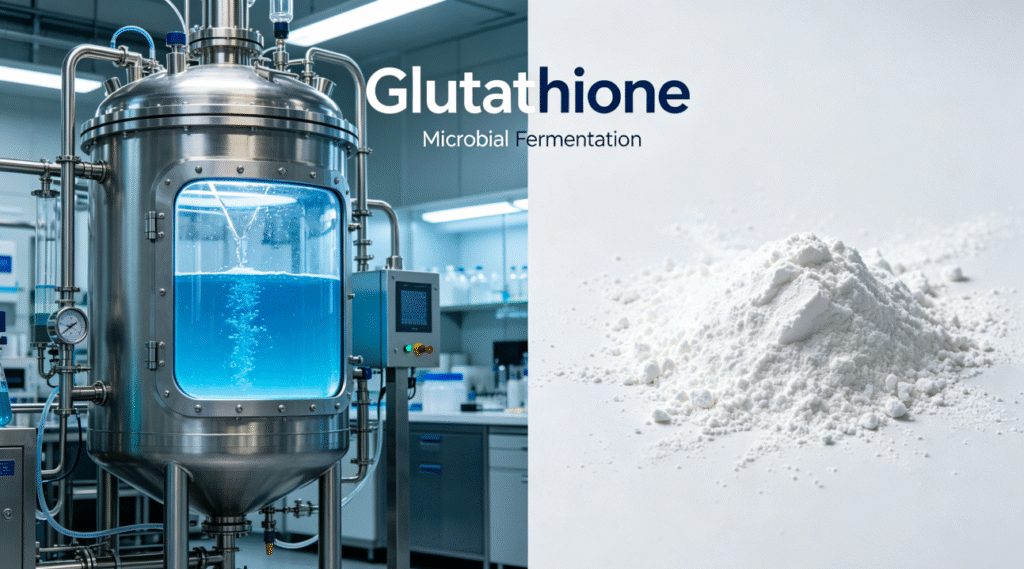
1. Microbial Fermentation (Premium Industrial Standard)
- Microbial Fermentation: A mainstream food and cosmetic-grade production process for commercial glutathione. It uses yeast biosynthesis and low-temperature purification without chemical reagents.
- Quality Control: Strictly controlled heavy metal (Pb, As, Cd, Hg) and microbial indicators conforming to FDA/EU limits, low solvent residues, full negative bacteria and mold test results.
- Stability: High active GSH retention, stable chemical properties, good heat and oxidation tolerance during formula processing, consistent batch quality.
- Regulatory Status: GRAS-certified, clean-label compliant, eligible for global dietary supplement and cosmetic registration.
- Application: Suitable for high-end oral whitening, liver-support supplements, and anti-aging skincare formulas.
2. Chemical Synthesis (Low-End Industrial Grade)
- Chemical Synthesis: Produced through artificial chemical polymerization.
- Quality Control: Prone to residual heavy metal catalysts and organic solvents, may contain isomeric impurities, may fail high-standard microbial and residue inspection.
- Stability: Poor molecular stability, prone to oxidation and efficacy attenuation after formulation, short finished product shelf life.
- Regulatory Status: Not compliant with clean-label rules, restricted or rejected in EU and premium US supplement markets.
- Application: Only applicable for low-standard industrial raw material usage, not recommended for food and cosmetic high-end formulations.
3. Plant Extraction (Traditional Process)
- Plant Extraction: Extracted from glutathione-rich plant tissues.
- Quality Control: Low active content, variable impurity and microbial counts, difficult to achieve fixed HPLC purity standards.
- Stability: Active ingredients degrade rapidly due to plant endogenous enzymes, resulting in fluctuating quality across batches and poor formula stability.
- Regulatory Status: No unified industrial standard, difficult to complete formal food-grade and cosmetic-grade qualification filing.
- Application: Not available for standardized mass production and commercial finished product formulation, only limited to laboratory research use.
Core Functional Benefits for Commercial Formulations
Fermented reduced glutathione supports multi-scenario commercial formula development, with standardized research-backed properties:
- Antioxidant & Antioxidant Recycling: Studied for its role in scavenging free radicals, inhibiting cellular oxidative aging, and activating secondary antioxidant systems to prolong the efficacy of VC and VE in formulas.
- Hepatic Detox & Metabolic Support: Studied for its role in liver fat metabolism and heavy metal excretion (mercury, lead), widely used in liver-support and sub-health conditioning supplement series.
- Immune Regulation: Studied for its role in optimizing immune cell activity, assisting in immune system maintenance, and supporting body resistance.
- Skin Brightening & Anti-Aging: Studied for its role in inhibiting melanin deposition, improving skin dullness and pigmentation, and accelerating skin cell metabolism, a core raw material for oral whitening and topical anti-aging cosmetic formulas.
- Cellular Health Maintenance: Studied for its role in normalizing cell apoptosis, protecting DNA and protein activity, and improving chronic oxidative damage associated with long-term stress, aging, smoking, and poor diet.
Strict B2B Quality Control Indicators (Procurement Inspection Standards)
Professional manufacturers must provide full test data to support batch release. Our glutathione bulk powder complies with the following industrial inspection standards, available for third-party verification:
- Purity Specification: 98% Reduced Glutathione (HPLC tested), high active ingredient content, low oxidized impurities
- Heavy Metal Control: Lead, arsenic, cadmium, mercury fully compliant with EU & FDA food-grade limits, no heavy metal catalyst residues
- Microbiological Indicators: Total bacteria, mold, yeast, E. coli, salmonella fully negative, meeting cosmetic and dietary supplement sterile standards
- Residue Detection: Low organic solvent residues, no synthetic additives, clean label compliant
- Batch Consistency: Stable powder fineness, moisture content, and activity retention across all batches, avoiding finished product quality fluctuation
Formulation Stability & Application Notes for Manufacturers
Professional manufacturers must provide full test data to support batch release. Our glutathione bulk powder complies with the following industrial inspection standards, available for third-party verification:
- Purity Specification: 98% Reduced Glutathione (HPLC tested), high active ingredient content, low oxidized impurities
- Heavy Metal Control: Lead, arsenic, cadmium, mercury fully compliant with EU & FDA food-grade limits, no heavy metal catalyst residues
- Microbiological Indicators: Total bacteria, mold, yeast, E. coli, salmonella fully negative, meeting cosmetic and dietary supplement sterile standards
- Residue Detection: Low organic solvent residues, no synthetic additives, clean label compliant
- Batch Consistency: Stable powder fineness, moisture content, and activity retention across all batches, avoiding finished product quality fluctuation
Why Choose Our Bulk Glutathione Raw Material
We focus on providing industrial-grade high-purity reduced glutathione powder for global manufacturers and brand formulators. Adopting pure microbial fermentation technology, we avoid chemical synthesis residues and plant extraction instability problems. All products are 98% high-purity active GSH with stable batch quality and full compliance documents. We support small trial orders and large-batch bulk wholesale, provide professional formula compatibility technical guidance, and help solve core pain points such as unstable finished product quality and unqualified market access for buyers.
Leave A Comment