
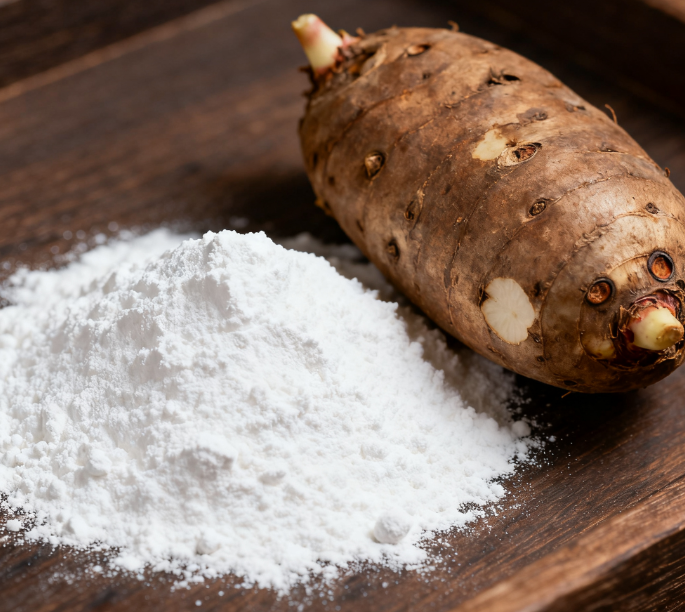
What is Konjac Gum?
Konjac Gum, derived from the traditional Asian konjac plant‘s underground corm, is gaining significant attention in the global food and health industries for its exceptional functionality and properties. This natural dietary fiber, primarily composed of glucomannan, carries centuries of traditional use while demonstrating remarkable potential in modern food science applications.
Konjac Gum is a pure natural water-soluble dietary fiber extracted from the konjac corm. Its primary active component is glucomannan, a unique polysaccharide with exceptionally high molecular weight and water-absorption capacity. This distinctive property allows it to form high-viscosity gels in water, making it valuable across food, pharmaceutical, and industrial applications.
Production and Processing
-
Advanced automated washing and impurity removal systems to reduce heavy metal and microbial residues
-
Precision controlled low-temperature drying processes to preserve glucomannan molecular integrity and activity
-
Ultra-fine precision grinding to achieve uniform particle size and excellent solubility
-
Strict quality testing at every production stage, from raw material inspection to finished product delivery
-
Dust-free, moisture-proof packaging in sterile environments to extend shelf life
Nutritional Profile and Chemical Properties
1.Key Components
-
Glucomannan: 70-90% of total composition
-
Soluble Fiber: Nearly 100% of content
-
Low Calorie: Minimal digestible carbohydrates
-
Minimal Protein and Fat: Negligible amounts
-
Natural Minerals: Trace elements from the soil
2.Functional Properties
-
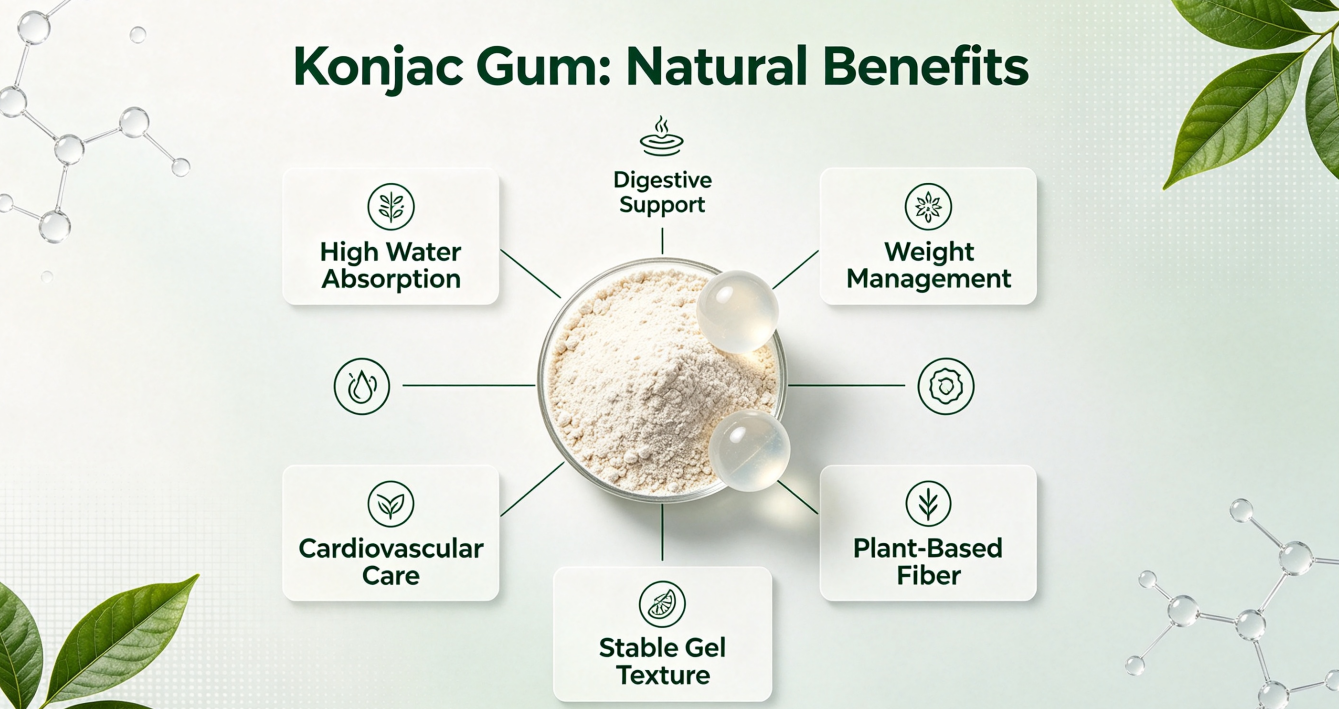
High Water Absorption: Can absorb up to 200 times its weight in water
-
Gel Formation: Creates stable thermo-reversible gels
-
Viscosity Development: Forms high-viscosity solutions
-
Fat Mimicking: Can replace fats in various applications
-
Stabilizing Ability: Excellent emulsion and foam stabilization
Health Benefits and Scientific Evidence
1.Digestive Health Support:Extensive research confirms konjac gum’s digestive benefits
-
Constipation Relief: Studies show 30% improvement in bowel movement frequency
-
Prebiotic Effects: Supports growth of beneficial gut bacteria
-
Bowel Regularity: Adds bulk to stool naturally
-
Gut Barrier Support: May help maintain intestinal lining integrity
2.Weight Management:Clinical studies demonstrate weight management benefits
-
Appetite Control: Expands in stomach to promote fullness
-
Calorie Reduction: Replaces higher-calorie ingredients
-
Metabolic Support: May improve carbohydrate metabolism
-
Satiety Enhancement: Reduces between-meal snacking
3.Cardiovascular Health:Research supports cardiovascular benefits
-
Cholesterol Reduction: Lowers LDL and total cholesterol levels
-
Triglyceride Management: May help reduce triglyceride levels
-
Blood Sugar Regulation: Slows carbohydrate absorption
-
Blood Pressure Support: Some evidence of mild blood pressure benefits
4.Skin Health Applications:Emerging research suggests dermatological benefits
-
Acne Management: May help reduce acne symptoms
-
Wound Healing: Potential to support skin repair
-
Skin Hydration: Can improve moisture retention
-
Anti-inflammatory Effects: May reduce skin inflammation
Applications in Food Industry
Modern Food Applications
-
Gluten-Free Products: Texture enhancer for baked goods
-
Low-Calorie Foods: Base for diet-friendly products
-
Vegan Formulations: Egg and dairy replacement
-
Sauce Thickening: Natural thickener for various sauces
-
Beverage Clarification: Clarifying agent for drinks
Supplement Industry Uses
-
Dietary Fiber Supplements: Pure glucomannan capsules
-
Weight Management Products: Appetite control formulations
-
Digestive Health Aids: Constipation relief products
-
Cholesterol Management: Cardiovascular support supplements
Global Regulatory Compliance & Certification
1. U.S. FDA GRAS Status
Konjac gum (konjac glucomannan) is officially recognized as GRAS (Generally Recognized As Safe) by the U.S. Food and Drug Administration (FDA), with official GRAS notices including GRN 328 and GRN 407. It is legally approved for widespread use in food, beverages, dietary supplements, and functional food formulations in the U.S. market. It complies with FDA’s good manufacturing practice (GMP) requirements, with no usage limit restrictions for conventional food applications when used within standard formulation ratios. All qualified konjac gum suppliers must complete FDA facility registration and product safety filing to meet U.S. import and sales standards.
2. European Union Official Standard (E425)
In the European Union, konjac gum is classified as a legal food additive with the unified code E425, subdivided into two standardized categories under EU Regulation 1333/2008 and Commission Regulation (EU) 231/2012, ensuring precise industry classification:
- E425i: Konjac Gum – Water-extracted konjac hydrocolloid, mainly used for food thickening, stabilization and gelling
- E425ii: Konjac Glucomannan – High-purity ethanol-purified glucomannan, mainly applied in high-end supplements, functional foods and cosmetic formulas
The EU has clear usage specifications for E425: it is approved for most food categories, with only restricted use in mini jelly cups to avoid choking risks. All konjac gum entering the EU market must comply with E425 purity standards, microbial limits and heavy metal residue specifications.
3. Global Market Safety Standards & Certifications
-
China GB Standard: Complies with GB 28308 national food additive safety standard, the core export quality standard for Chinese konjac raw materials
-
International Certification System: Qualified products support ISO22000 food safety management system, HACCP hazard control, BRC global food safety standard, HALAL and KOSHER kosher certifications, covering mainstream global trading markets
-
Other Regional Approvals: Officially approved for food and supplement use in Australia, New Zealand, Southeast Asia, and Middle Eastern markets, with unified safety recognition across global food regulatory authorities
Recommended Usage Guidelines
Dosage Recommendations
-
General Health: 1-3 grams daily with meals
-
Weight Management: 2-4 grams before meals
-
Constipation Relief: 3-5 grams with plenty of water
-
Maximum Safe Dose: Typically 15 grams daily under supervision
Preparation Methods
-
Proper Hydration: Always mix with adequate water
-
Timing Considerations: Best taken before meals
-
Combination Foods: Can be incorporated into recipes
-
Supplement Forms: Follow manufacturer instructions
Market Trends and Future Outlook
Growing Demand Drivers
-
Rising obesity and diabetes prevalence
-
Increasing digestive health awareness
-
Vegan and plant-based diet trends
-
Clean label movement growth
-
Functional food market expansion
Innovation Opportunities
-
New delivery systems and formulations
-
Combination products with other fibers
-
Medical food applications
-
Cosmetic and personal care uses
-
Sustainable packaging solutions
Conclusion
Konjac Gum represents a remarkable convergence of traditional wisdom and modern nutritional science. Its unique combination of functional properties and studied benefits makes it a valuable ingredient for both food manufacturers and health-conscious consumers.
As research continues to explore new applications and properties, konjac gum is poised to play an increasingly important role in supporting digestive health, weight management, and overall wellness. Proper usage, quality sourcing, and awareness of safety considerations ensure that consumers can enjoy its properties while minimizing potential risks.
The future looks promising for this ancient plant derivative as it finds new applications in modern health and wellness products, continuing its journey from traditional Asian kitchens to global markets.
Ready to try Konjac Gum for your business? Contact us at info@xianherb.com for a free sample or wholesale price list.
Leave A Comment