
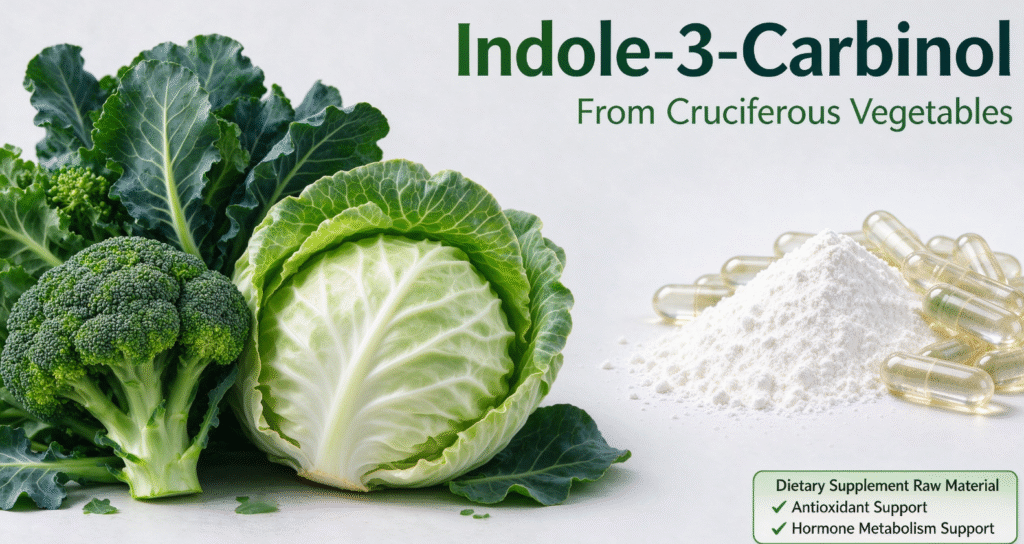
 In the evolving landscape of plant-based bioactive compounds, few molecules bridge traditional dietary wisdom and modern molecular biology as effectively as Indole-3-Carbinol (I3C). As a primary bioactive compound found abundantly in cruciferous vegetables like broccoli, cabbage, and Brussels sprouts, this versatile metabolite has transitioned from academic investigation to a commercially significant ingredient in the global women’s health, cellular protection, and detoxification markets. For formulators, supplement brands, and B2B buyers seeking evidence-backed botanical solutions, I3C offers a rare combination: a well-characterized metabolic pathway, a growing body of research, and a supply chain rooted in high-purity chemical synthesis and botanical extraction capabilities.
What Is Indole-3-Carbinol?
Indole-3-Carbinol (C₉H₉NO) is a naturally occurring heterocyclic compound derived from the glucosinolate glucobrassicin, which is found in high concentrations in the Brassicaceae family. When the plant tissue is damaged (e.g., by chewing or chopping), the enzyme myrosinase converts glucobrassicin into I3C.
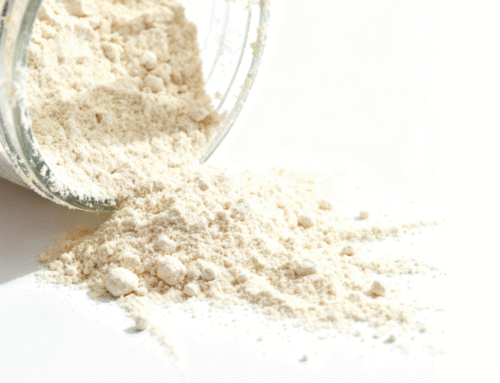
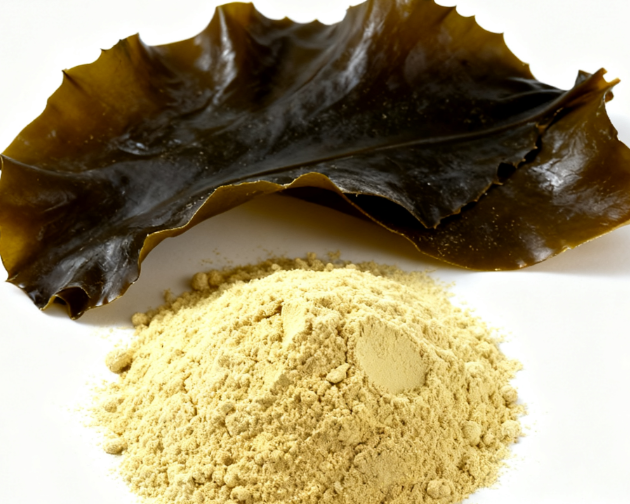
From a chemical perspective, I3C is an off-white to light beige crystalline powder with a molecular weight of approximately 147.18 g/mol and a CAS number of 700-06-1. It is slightly soluble in water, soluble in organic solvents like ethanol and DMSO. Commercial I3C products are typically offered as high-purity extracts or synthetic equivalents (≥98% by HPLC) for pharmaceutical, research, and premium nutraceutical applications. In the acidic environment of the stomach, I3C is highly unstable and rapidly condenses into a mixture of oligomeric products, most notably 3,3′-Diindolylmethane (DIM), which is considered the primary bioactive metabolite responsible for its systemic effects.
Mechanism of Action: A Multi-Target Metabolite
Unlike simple antioxidants that act through a single pathway, I3C exerts its biological effects through a network of interconnected mechanisms, primarily driven by its conversion to DIM and its ability to modulate gene expression. This multi-target profile is critical for formulators developing products for hormonal balance, liver health, and cellular defense.
-
Estrogen Metabolism Modulation: I3C is renowned for its ability to shift estrogen metabolism. It promotes the preferential formation of 2-hydroxyestrone over 16α-hydroxyestrone, favoring a more favorable estrogen metabolite profile. This mechanism is central to its widespread use in women’s health and breast tissue support formulations.
-
Aryl Hydrocarbon Receptor (AhR) Agonism: I3C acts as a mild agonist for the AhR, a transcription factor involved in the regulation of xenobiotic-metabolizing enzymes (Phase I and Phase II). This activation helps upregulate detoxification enzymes such as glutathione S-transferases (GSTs).
-
Antioxidant and Anti-inflammatory Activity: The DIM metabolite of I3C exhibits potent anti-inflammatory properties, inhibiting the NF-κB pathway and reducing the expression of pro-inflammatory cytokines such as TNF-α and IL-6. It also helps protect cells from oxidative stress.
-
Gut Barrier and Microbiome Support: Recent research indicates that I3C can enhance the intestinal barrier function by upregulating tight junction proteins like ZO-1 and Occludin. It also promotes a healthy gut microbiome by increasing the abundance of beneficial bacteria, such as Akkermansia.
Clinical Evidence: What the Research Shows
For B2B buyers evaluating I3C for product development, understanding the research evidence base is essential for accurate positioning and compliant claim substantiation.
-
Women’s Health and Hormonal Balance: I3C has been extensively studied for its role in supporting cervical and breast tissue health. Clinical trials and observational studies suggest that regular supplementation supports healthy estrogen metabolism and cellular health in hormone-sensitive tissues.
-
Metabolic and Hepatic Health: Emerging studies demonstrate that I3C and its metabolites support liver function by aiding in the body’s natural detoxification processes. Recent preclinical models also show promising results in modulating lipid metabolism and reducing fat accumulation, opening avenues for metabolic wellness formulations.
-
Bioavailability and Metabolite Delivery: Because I3C is rapidly converted to DIM, modern clinical research often focuses on the pharmacokinetics of DIM. Formulators are increasingly utilizing DIM-forward strategies or specialized delivery systems (like lipid matrices) to ensure consistent plasma concentrations of the active metabolite.
Market Landscape: A Growing Global Opportunity
The global market for I3C and DIM is experiencing robust growth, driven by rising consumer awareness of natural hormone balance and preventive health solutions.
-
Market size and growth: The market for cruciferous vegetable extracts and I3C/DIM ingredients is projected to grow steadily, driven by the booming women’s health and healthy aging sectors.
-
Application segments:
-
Nutraceuticals and dietary supplements: The largest application segment, particularly for women’s health, PMS support, and liver detox formulas.
-
Functional foods and beverages: An emerging segment incorporating I3C into wellness shots and fortified beverages.
-
Pharmaceuticals: Driven by its potential in chemoprevention and metabolic disorders.
-
-
Consumer trends: The growing interest in “clean label” hormone support and the mainstreaming of women’s health discussions are driving strong demand for well-sourced I3C.
Product Specifications and Quality Control
As a B2B ingredient, the value of I3C lies in purity standardization, stability, and contaminant control.
-
Typical specifications: High-purity I3C is available at ≥98% (HPLC). The product is typically a white to off-white crystalline powder. Because of its instability in acidic conditions, formulations often require enteric coatings or lipid-based delivery systems.
-
Quality control considerations: Inconsistent I3C content and residual solvents are common challenges. Best practices include rigorous HPLC-based quantification, third-party testing for heavy metals (lead, arsenic, mercury, cadmium), microbials, and residual solvents.
-
Documentation support: Complete documentation includes a Certificate of Analysis (COA), Material Safety Data Sheet (MSDS), specification sheet, and third-party test reports.
Why Choose Xi’an Herb Bio-Tech Indole-3-Carbinol?
As a professional botanical extract and bioactive ingredient supplier, Xi’an Herb Bio-Tech Co., Ltd offers Indole-3-Carbinol products that meet the rigorous requirements of B2B buyers:
-
Multiple grades for diverse applications: From high-purity I3C (≥98%) for research and pharmaceutical applications to customized blends for cost-sensitive nutraceutical formulations, we provide specification options to match your formulation and budget requirements.
-
Complete documentation support: Every shipment includes COA, MSDS, specification sheet, and third-party test reports covering heavy metals, microbials, and residual solvents. Our quality control processes are aligned with standard analytical methods.
-
Flexible supply: Minimum order quantities as low as 1 kg for trial orders, with scalable pricing for commercial volumes. We support custom packaging and labeling to meet your brand requirements.
-
Stable supply chain: Leveraging our established network of raw material partners and our own production capabilities, we ensure consistent availability and batch-to-batch reproducibility—critical for brands maintaining product quality across production runs.
Ready to try Indole-3-Carbinol for your business? Contact us at info@xianherb.com for a free sample or wholesale price list.




Leave A Comment