
Introduction: A Millennium-Old Pigment with Modern Therapeutic Promise
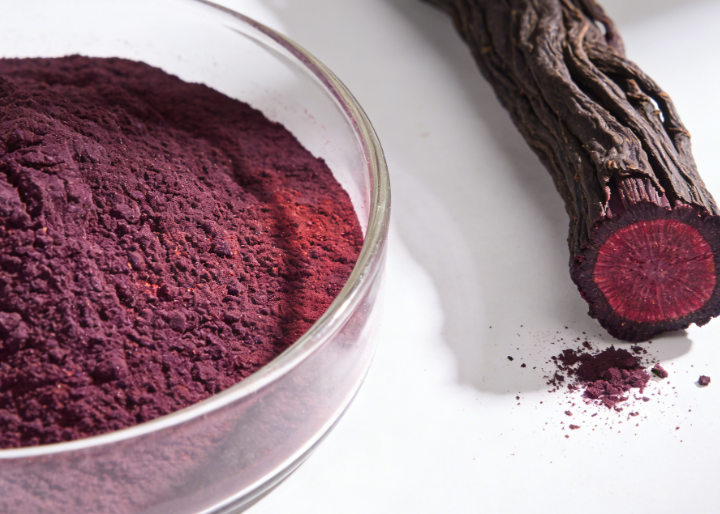
Shikonin, the vibrant crimson-purple naphthoquinone pigment extracted from the roots of Lithospermum erythrorhizon and related species like Arnebia euchroma, represents one of the most fascinating intersections of traditional medicine and cutting-edge pharmaceutical research. For over two thousand years, this compound has colored silk, treated wounds, and symbolized vitality in East Asian healing traditions. Today, modern science is unraveling its remarkable multi-target mechanisms against inflammation, cancer, and infection, positioning it as a prototype for next-generation therapeutic agents.
Historical and Cultural Legacy: From Imperial Robes to Village Clinics
The story of shikonin is woven into the fabric of Asian history:
-
Ancient Dyeing Art: Known as “Zicao” in Chinese and “Shikon” in Japanese, its roots provided a prized, colorfast purple dye for imperial garments and ceremonial textiles as early as the Han Dynasty (206 BCE–220 CE).
-
Traditional Medicine: Documented in the Shennong Bencao Jing (c. 200 CE) for cooling blood, promoting rash eruption, and detoxification. It became a cornerstone for treating burns, wounds, measles, and sore throat.
-
Cultural Symbolism: The color purple, derived from shikonin, historically represented nobility, spirituality, and healing across China, Korea, and Japan.
-
Modern Rediscovery: Isolated in the 1930s, its chemical structure was elucidated in the 1950s, igniting pharmacological interest that continues to accelerate today.
Chemical Identity and Biosynthesis: Nature’s Complex Engineering
Shikonin belongs to the naphthoquinone class, specifically as an enantiomer of alkannin. Its unique properties stem from its intricate structure and production:
Core Characteristics:
-
Chemical Formula: C16H16O5
-
Structure: A naphthoquinone core with hydroxyl and hydroxymethyl substituents and an unsaturated side chain
-
Solubility: Lipophilic, requiring formulation strategies for bioavailability
-
Stability: Sensitive to light and oxidation, necessitating careful processing
Biosynthetic Pathway:
-
Precursors: Derived from the mevalonate and shikimate pathways
-
Key Enzymes: Including p-hydroxybenzoate geranyltransferase unique to Boraginaceae
-
Tissue Specificity: Accumulates in root periderm cells, likely as a defense compound
-
Elicitor Response: Production can be dramatically enhanced by fungal components or injury
Mechanisms of Action: A Multi-Target Therapeutic Agent
Shikonin’s power lies in its ability to modulate multiple cellular pathways simultaneously:
Anti-inflammatory Actions:
-
NF-κB Inhibition: Suppresses this master regulator of inflammation at multiple points
-
COX-2 and iNOS Downregulation: Reduces production of inflammatory mediators
-
Cytokine Modulation: Decreases TNF-α, IL-1β, IL-6 while potentially increasing anti-inflammatory IL-10
-
MAPK Pathway Regulation: Influences ERK, JNK, and p38 signaling cascades
Anticancer Properties:
-
Pyroptosis Induction: Unique ability to trigger this inflammatory form of cell death in cancer cells
-
Cell Cycle Arrest: Halts progression at G1/S or G2/M phases depending on cell type
-
Mitochondrial Disruption: Depolarizes membranes and inhibits respiration
-
Metastasis Inhibition: Suppresses MMP expression and epithelial-mesenchymal transition
-
Chemosensitization: Enhances effects of conventional chemotherapy agents
Antimicrobial Activity:
-
Membrane Disruption: Targets bacterial and fungal cell membranes
-
Biofilm Inhibition: Prevents formation of resistant microbial communities
-
Synergy with Antibiotics: Restores sensitivity in multidrug-resistant strains
Wound Healing Promotion:
-
Angiogenesis Stimulation: Promotes new blood vessel formation
-
Fibroblast Activation: Enhances collagen production and tissue remodeling
-
Antioxidant Protection: Scavenges free radicals at wound sites
Evidence-Based Therapeutic Applications
Oncology Research:
-
Liver Cancer: Demonstrated potent activity against hepatocellular carcinoma in vitro and in vivo
-
Leukemia: Induces apoptosis in various leukemia cell lines, including drug-resistant forms
-
Breast Cancer: Shows promise against triple-negative subtypes through multiple mechanisms
-
Glioblastoma: Penetrates blood-brain barrier and targets glioma stem cells
-
Clinical Trials: Early-phase studies exploring safety and preliminary efficacy
Dermatology and Wound Care:
-
Burn Treatment: Accelerates healing and reduces scarring in animal models
-
Psoriasis: Modulates keratinocyte proliferation and differentiation
-
Atopic Dermatitis: Reduces inflammation and itching in experimental models
-
Acne Vulgaris: Combats Propionibacterium acnes and associated inflammation
Inflammatory Conditions:
-
Arthritis: Reduces joint swelling and destruction in rodent models of RA and OA
-
Inflammatory Bowel Disease: Ameliorates colitis in experimental systems
-
Neuroinflammation: Shows potential in models of neurodegenerative conditions
Infectious Diseases:
-
Antiviral Activity: Against influenza, HIV, and hepatitis viruses in preclinical studies
-
Antibacterial Effects: Particularly against Gram-positive pathogens including MRSA
-
Antifungal Properties: Active against Candida species and dermatophytes
Formulation Challenges and Solutions
Bioavailability Enhancement:
-
Nanotechnology: Liposomes, nanoparticles, and micelles improving solubility and targeting
-
Prodrug Approaches: Chemical modifications for improved pharmacokinetics
-
Topical Formulations: Gels, ointments, and patches for dermatological applications
-
Combination Strategies: Synergistic formulations with other natural compounds
Stability Optimization:
-
Encapsulation Techniques: Protection from light and oxidation
-
Antioxidant Co-formulations: With vitamins C and E
-
Lyophilization: For long-term storage of standardized extracts
-
Quality Control Protocols: HPLC standardization and stability testing
Safety Profile and Pharmacological Considerations
Toxicology Data:
-
Acute Toxicity: Moderate, with LD50 values varying by administration route
-
Chronic Exposure: Generally well-tolerated in therapeutic ranges in animal studies
-
Organ Specificity: Some hepatotoxicity at high doses, reversible upon discontinuation
-
Reproductive Effects: Limited data, caution advised during pregnancy
Drug Interactions:
-
Chemotherapy Agents: Potential for enhanced effects requiring dose adjustment
-
Anticoagulants: May potentiate bleeding risk through antiplatelet activity
-
Immunosuppressants: Theoretical interactions with inflammatory pathway modulators
-
Metabolic Enzymes: May influence CYP450 activity, particularly CYP3A4
Quality Assessment and Standardization
Botanical Authentication:
-
Species Verification: Distinguishing Lithospermum erythrorhizon from related species
-
Geographic Sourcing: Quality varies with growing conditions and cultivation methods
-
Sustainable Harvesting: Wild populations threatened, cultivation essential
-
Adulteration Detection: HPLC fingerprinting against reference standards
Standardization Parameters:
-
Shikonin Content: Typically 1-5% in dried roots, enhanced through elicitation
-
Related Compounds: Alkannin, acetylshikonin, and other naphthoquinones
-
Contaminant Limits: Heavy metals, pesticides, microbial loads
-
Stability Indicators: Degradation products and color consistency
Market Applications and Product Development
Pharmaceutical Development:
-
Oncology Candidates: Several derivatives in preclinical and early clinical development
-
Topical Medications: For burns, wounds, and inflammatory skin conditions
-
Combination Therapies: With conventional drugs to enhance efficacy and reduce resistance
-
Medical Devices: Coated sutures, wound dressings, and implants
Cosmeceutical Applications:
-
Anti-aging Formulations: Antioxidant and anti-inflammatory properties for skin health
-
Acne Treatments: Natural alternative to conventional antimicrobials
-
Wound Healing Products: For post-procedure care and scar management
-
Color Cosmetics: Natural purple pigment with bioactive benefits
Nutraceutical Potential:
-
Inflammatory Support: For joint health and immune modulation
-
Liver Health: Traditional hepatoprotective applications with modern validation
-
Antioxidant Formulas: As part of comprehensive oxidative stress management
-
Specialty Supplements: Targeted formulations for specific health concerns
Regulatory Landscape and Future Directions
Global Regulatory Status:
-
Traditional Medicine Recognition: Accepted in Chinese and Japanese pharmacopeias
-
Novel Compound Considerations: Regulatory pathways for purified shikonin derivatives
-
Safety Evaluation Requirements: Varying by intended use and geographic market
-
Intellectual Property: Numerous patents covering extraction, formulations, and uses
Research Frontiers:
-
Mechanistic Elucidation: Further unraveling of multi-target effects
-
Structural Optimization: Developing derivatives with improved properties
-
Delivery Innovations: Advanced systems for targeted administration
-
Combination Strategies: Systematic exploration of synergistic partners
-
Clinical Translation: Moving from promising preclinical data to human applications
Sustainability and Ethical Considerations
Conservation Challenges:
-
Wild Population Decline: Due to overharvesting and habitat loss
-
Cultivation Advances: Tissue culture and controlled agriculture developments
-
Biotechnological Solutions: Cell suspension cultures and metabolic engineering
-
Fair Trade Practices: Supporting sustainable livelihoods for cultivators
Quality Assurance Protocols:
-
Traceability Systems: From field to finished product
-
Good Agricultural Practices: For cultivated material
-
Green Extraction Methods: Reducing environmental impact
-
Circular Economy Approaches: Utilizing byproducts and waste streams
Conclusion: Bridging Ancient Wisdom and Modern Science
Shikonin stands as a compelling testament to the enduring value of traditional medicinal knowledge when investigated with modern scientific rigor. Its journey from imperial dye to preclinical candidate illustrates how deep pharmacological exploration can reveal unexpected therapeutic treasure in long-used natural resources.
The future of shikonin appears promising but requires careful navigation of formulation challenges, safety considerations, and sustainability concerns. As research continues to uncover its multifaceted mechanisms and potential applications, this ancient purple pigment may well find new life as a modern therapeutic agent, offering novel approaches to some of medicine’s most persistent challenges.
For product developers and researchers, shikonin represents both an opportunity and a responsibility—the chance to develop innovative natural products backed by substantial science, coupled with the duty to ensure sustainable sourcing, rigorous quality control, and transparent communication about both benefits and limitations.
Advanced Shikonin Extract Solutions
Our specialized extraction and formulation technologies deliver standardized shikonin products with verified bioactivity and stability profiles. Contact our technical team for analytical data, formulation support, and customized development services for pharmaceutical, cosmeceutical, or nutraceutical applications.
Leave A Comment