

Introduction
Ginger (Zingiber officinale) has been a cornerstone of culinary and medicinal traditions for centuries. From fresh roots to standardized extracts, this versatile ingredient continues to captivate modern consumers and manufacturers alike. In this article, we explore the research-backed properties, applications, and sourcing considerations that make ginger an indispensable ingredient for today’s health and wellness markets.
Key Bioactive Compounds
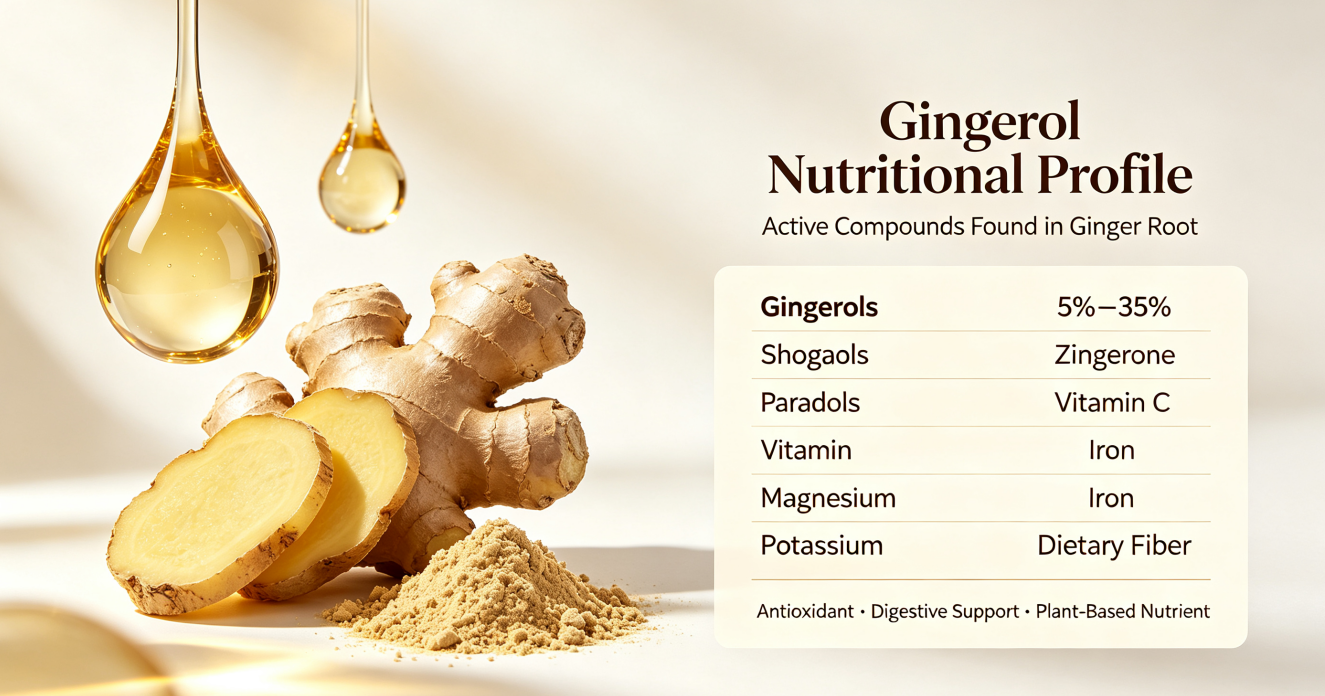
The potency of ginger stems from its rich profile of natural compounds, most notably gingerols, which are responsible for its characteristic pungency and primary properties. Additional active components include shogaols, zingerone, and paradols, all contributing to ginger‘s antioxidant and anti-inflammatory properties.
Evidence-Based Health Benefits
1. Digestive Health Support
Clinical studies confirm ginger’s role in promoting gastrointestinal motility, helping to accelerate gastric emptying and reduce symptoms of bloating, constipation, and functional dyspepsia. This makes ginger extract particularly valuable for formulations targeting digestive comfort.
2. Nausea and Morning Sickness Relief
Ginger’s antiemetic properties are well-documented across multiple studies, showing significant efficacy in managing nausea related to pregnancy, chemotherapy, and postoperative recovery without the side effects associated with pharmaceutical alternatives.
3. Antioxidant and Cellular Protection
As a rich source of antioxidants, ginger helps combat oxidative stress by neutralizing free radicals. This protective effect extends to cellular health, making it a valuable ingredient for anti-aging and wellness formulations.
4. Anti-Inflammatory Applications
Emerging research indicates that ginger’s anti-inflammatory compounds may benefit conditions like rheumatoid arthritis and respiratory inflammation, though further clinical studies are ongoing to establish standardized dosing protocols.
Advanced Extraction & Processing Innovation Technologies
Traditional steam distillation and ordinary solvent extraction have obvious defects such as low active ingredient retention, serious heat damage, and residual solvent risks. Our ginger ingredients adopt industry-leading innovative extraction and modification technologies to achieve efficient retention of active substances, diverse solubility adaptation, and low-risk purity, supporting high-end industrial formulation needs.
1. Supercritical CO₂ Extraction Technology (Core Process)
We adopt low-temperature supercritical CO₂ fluid extraction technology, operating under precise controlled conditions of 40–50°C and 80–350 bar pressure. Unlike traditional high-temperature extraction, this technology avoids the thermal degradation of heat-sensitive gingerols and shogaols, retaining more than 99% of the original biological activity of active ingredients. Using pure CO₂ as the extraction solvent, no organic solvent is involved in the whole process, realizing low solvent residue in finished products, fully compliant with USP/EP and global clean-label standards. This process efficiently separates high-purity ginger oleoresin, locking the maximum content of gingerols and supporting stable and consistent quality of each batch of extracts.
2. Water-Soluble Ginger Oleoresin Modification Technology
Traditional ginger oleoresin is only oil-soluble, with poor water dispersion, limiting its application in beverages, water-soluble supplements, and aqueous skincare products. Through innovative secondary emulsification and water-soluble modification technology, we successfully convert high-purity supercritical-extracted ginger oleoresin into full water-soluble ginger extract powder. It features fast dissolution, no precipitation, uniform dispersion, and no impact on product clarity and flavor, addressing the formulation pain points of traditional ginger ingredients in water-based products and greatly expanding industrial application scenarios.
3. Spray Drying & Microencapsulation Stabilization Technology
On the basis of supercritical extraction, we adopt low-temperature spray drying and microencapsulation technology to wrap active ginger components, effectively isolate the influence of light, heat, and oxygen, significantly improve the storage stability of gingerols, reduce active ingredient attenuation during shelf life, and ensure long-term batch quality consistency of finished formulations.
Commercial Applications and Formulations
1. Dietary Supplements
-
Gingerol-standardized extracts (typically 5%-20% gingerols)
-
Capsules and tablets for digestive and anti-inflammatory support
-
Softgels with ginger oil concentrates
-
Powder formulations for flexible dosing
2. Functional Foods and Beverages
-
Ginger tea blends using both fresh and dried ginger
-
Sport nutrition products for recovery and inflammation management
-
Functional confectionery including ginger chews and lozenges
-
Ready-to-drink beverages with standardized ginger extracts
3. Nutricosmetic and Topical Products
-
Anti-aging formulations leveraging ginger’s antioxidant properties
-
Topical analgesics for muscle and joint comfort
-
Skin health products utilizing ginger’s anti-inflammatory benefits
Quality Specifications for Manufacturers
Standardized Extract Parameters:
-
Gingerols content: 5%-20% (HPLC verified)
-
Solvent residues: Meets USP/EP standards
-
Heavy metals: Compliant with international limits
-
Microbiological standards: Within regulatory requirements
Available Forms:
-
Water-soluble powders for beverage applications
-
Oil-soluble extracts for softgel formulations
-
Spray-dried powders for enhanced stability
-
Organic-certified options for clean-label products
Market Trends and Consumer Insights
Core Demand Drivers
- Global clean label trend: Consumers prefer natural, traceable, zero-residue botanical ingredients
- Rising public awareness of digestive health and chronic inflammation management
- Rapid growth of plant-based functional nutrition market
- Traditional herbal efficacy continuously verified by modern clinical science
Cutting-Edge Industry Innovation Opportunities
- High-bioavailability compound formulas: Synergistic combination with turmeric, black pepper to enhance anti-inflammatory efficacy
- Novel delivery systems: Microencapsulation, slow-release technology to extend efficacy duration
- Water-soluble full-scene application: Break the limitation of traditional ginger ingredient solubility
Sustainable green processing: Supercritical zero-residue technology meets global environmental and sustainable development standards
Formulation Guidelines
Recommended Usage Levels:
-
Dietary supplements: 100-500 mg standardized extract daily
-
Functional foods: 0.5%-2% inclusion rate
-
Beverages: 0.1%-0.5% for flavor and functionality
-
Topical applications: 1%-5% in final formulations
Synergistic Combinations:
-
With turmeric for enhanced anti-inflammatory effects
-
With peppermint for digestive support
-
With vitamin C for antioxidant synergy
-
With probiotics for gut health formulations
Strict Gingerol Standardization & Professional Quality Control System
The core value of industrial-grade ginger extracts lies in accurate and stable gingerol standardization. We implement full-process quantitative quality control for core active ingredients to solve the industry pain point of unstable active content in traditional ginger products.
1.Precise Gingerol Grading Standardization (HPLC Verified)
All batches adopt high-performance liquid chromatography (HPLC) full quantitative detection, with customizable standardized specifications covering5%, 10%, 15%, 20% and up to 35% total gingerols. Each specification strictly controls the proportional balance of gingerols, shogaols and zingerone, avoiding single-component imbalance caused by uneven extraction. Every batch is attached with detailed HPLC spectrum and gingerol quantitative report to support accurate product formula development for manufacturers.
2.Full-Item Purity & Safety Quality Control
- Solvent Residue Control: Supercritical CO₂ process ensures zero organic solvent residue, far exceeding international standard limits
- Heavy Metal Detection: Strict detection of lead, arsenic, mercury, cadmium and other heavy metals, all indicators meet EU, FDA and USP/EP regulatory requirements
- Microbiological Control: Strict control of total bacteria, mold, yeast and pathogenic bacteria, compliant with food, cosmetic and pharmaceutical-grade safety standards
- Pesticide Residue Screening: Full-spectrum pesticide residue detection for raw ginger materials to ensure clean-label compliance
3.Batch Consistency Control Mechanism
From raw material origin screening, fixed-season harvesting, standardized extraction parameter setting to finished product testing, we implement full-process standardized management. Fixed raw material origin and harvesting cycle ensure stable initial active content of raw materials; automated production equipment locks extraction process parameters; batch-by-batch full detection ensures zero deviation of gingerol content, solubility and efficacy between different batches, eliminating formula fluctuation risks for terminal products.
Why Choose Our Ginger Ingredients?
Quality Assurance:
-
Vertically integrated supply chain from farm to finished product
-
GMP-certified manufacturing facilities
-
Rigorous quality control with batch-to-batch consistency
-
Comprehensive documentation including COA and TDS
Commercial Advantages:
-
Competitive pricing with volume-based discounts
-
Custom standardization options
-
Flexible MOQs for startups and established brands
-
Global logistics expertise
Ready to try Ginger Extract for your business? Contact us at info@xianherb.com for a free sample or wholesale price list.
Leave A Comment