
Global formulators and bulk buyers frequently ask what makes Artichoke Extract a must-have ingredient for commercial production. The answer lies in its unique phytochemical profile—a combination of cynarin, caffeoylquinic acids (including chlorogenic acid), and flavonoids (such as luteolin)—which has made it one of the most extensively researched botanical ingredients for liver health, digestive wellness, and metabolic support . With the global nutraceutical market continuing to expand, demand for high-quality, standardized artichoke extract is growing steadily across the dietary supplement, functional food, and animal nutrition industries.
What Is Artichoke Extract?
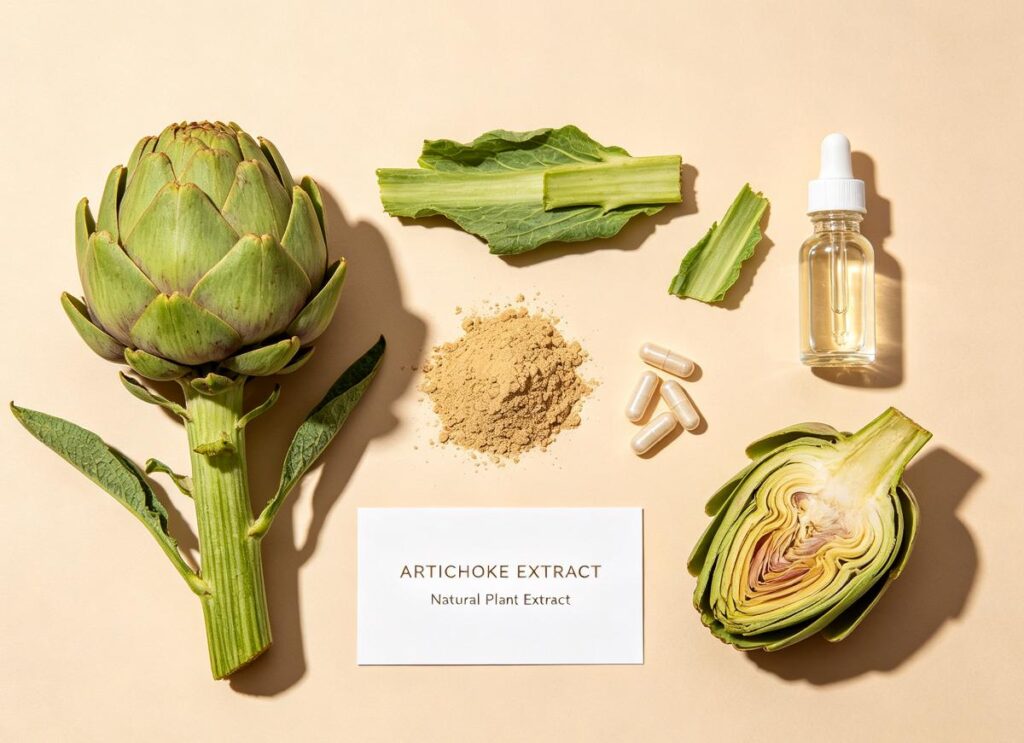
Artichoke Extract is a concentrated botanical ingredient derived from the leaves of Cynara scolymus L., a plant native to the Mediterranean region that has been used for centuries for its digestive and liver-supporting properties . The extract is valued for its naturally occurring bioactive compounds, particularly cynarin, chlorogenic acid, and other caffeoylquinic acids, which are primarily responsible for the extract’s biological activity .
In commercial production, artichoke extract is available in multiple standardized forms. Common specifications include standardization to cynarin and derivatives up to 10% (UV/VIS) or caffeoylquinic acids as chlorogenic acid up to 10% (HPLC) . The extract appears as a fine powder, with the color varying from light green to brownish-yellow depending on the extraction method and standardization level.
Core Specifications & Quality Grades
For professional buyers, understanding specifications is the first step to accurate procurement. The core specifications of artichoke extract are determined by active marker content, purity, and intended application .
Double Standardization – The Industry Benchmark
Premium artichoke extracts are standardized to two key marker groups: cynarin and derivatives (up to 10% UV/VIS) and caffeoylquinic acids such as chlorogenic acid (up to 10% HPLC) . This double standardization ensures consistency of the active profile between batches, which is critical for reliable formulation performance.
The complete phytochemical profile also includes flavonoids (luteolin, apigenin), sesquiterpenes, and other phenolic acids that contribute to the extract’s hepatoprotective, choleretic, and antioxidant activity . For nutraceutical applications, the 2.5% cynarin specification is commonly used in consumer products, while higher potency grades (up to 10%) are preferred for pharmaceutical and premium supplement formulations .
Application-Specific Grades
Not all artichoke extracts are the same. Depending on your application, you may need different grades:
Standardized Extract (2.5–5% Cynarin): Best suited for dietary supplements and capsules. This grade offers a balanced potency-to-cost ratio and is widely used in consumer health products .
High-Potency Extract (up to 10% Cynarin/Chlorogenic Acid): Preferred for pharmaceutical applications and premium formulations where maximum efficacy is required .
Water-Soluble Grades: Produced for beverage applications, syrups, and liquid formulations where cold-water solubility is essential. These require careful handling to maintain stability.
Organic Certified Grades: Available for manufacturers requiring EU or USDA organic certification, with full traceability from European-sourced Cynara scolymus L. leaves .
Animal Feed Grades: Designed for pet nutrition and animal feed applications, supporting animal welfare and digestive health .
Applications & Industrial Value
Artichoke extract is a versatile ingredient with applications spanning multiple industries.
In dietary supplements and nutraceuticals, artichoke extract is most commonly used in liver health, digestive support, and detoxification formulations. The scientific literature documents its hepatoprotective, choleretic, detoxification, and prebiotic effects, making it a key ingredient in products targeting metabolic health . Typical dosages in supplements range from 250 to 500 mg per serving of standardized extract, with common combinations including milk thistle, dandelion root, and turmeric for synergistic liver support blends.
In functional foods and beverages, artichoke extract is used in teas, powdered drinks, and digestive wellness products. Water-soluble grades enable easy incorporation into instant drink mixes and liquid formulations. Studies have demonstrated that artichoke extract exerts beneficial effects on various anthropometric parameters, including reductions in BMI and waist circumference, supporting its use in weight management and metabolic wellness products .
In cosmetics and personal care, artichoke extract’s antioxidant and anti-inflammatory properties support its use in anti-aging serums, soothing toners, and skin-protective formulations. Research has shown that artichoke waste extract, rich in chlorogenic acid and flavonoids such as luteolin derivatives, exhibits notable antioxidant/antiradical potential with low IC50 values in DPPH and ABTS assays . The extract has also demonstrated the ability to reduce H2O2-induced oxidative stress and enhance cell viability in human neuroblastoma cell models .
In animal feed and pet nutrition, artichoke extract is increasingly used to support animal welfare and digestive health, with specific grades designed for feed applications .
Clinical Evidence & Core Benefits
Artichoke extract has been extensively studied for its wide-ranging health benefits, with evidence derived from in vitro, animal, and clinical trials.
For metabolic health, a comprehensive systematic review and meta-analysis of clinical trials provides robust evidence supporting the metabolic benefits of artichoke supplementation. The pooled results indicate that artichoke exerts favorable effects on anthropometric indices, particularly BMI and waist circumference, while also contributing to improvements in blood pressure, atherogenic lipid parameters (total cholesterol, LDL-C, and triglycerides), insulin resistance markers (insulin and HOMA-IR), and hepatic enzymes (ALT) . Blood pressure outcomes revealed significant reductions in both systolic and diastolic pressures .
For liver health and hepatoprotection, a randomized placebo-controlled pilot trial (the “SteatoChoke-Study”) demonstrated that artichoke leaf extract reduces steatosis and decreases liver size in pre-bariatric patients, highlighting its potential role in managing metabolic dysfunction-associated steatotic liver disease . The extract’s hepatoprotective, choleretic, and detoxification effects are well-documented in both experimental pharmacology and clinical studies .
For cardiovascular health, research has demonstrated that artichoke flavonoids up-regulate endothelial-type nitric-oxide synthase (eNOS) gene expression in human endothelial cells, leading to increased nitric oxide production . This mechanism contributes to the extract’s vasoprotective effects, with ex vivo studies showing enhanced endothelium-dependent vasodilator response following artichoke extract treatment .
For prebiotic and gut health benefits, in vitro studies using simulated human intestinal microbial ecosystems have demonstrated that artichoke extract displays prebiotic potential, exerting bifidogenic effects (25-fold increase in bifidobacteria levels) and stimulating the production of health-related microbial metabolites, including acetate, propionate, and total short-chain fatty acids . This prebiotic activity is potentially due to the inulin content in artichoke extract .
For neuroprotection, recent research has explored the neuroprotective potential of polyphenol-rich artichoke extract in cellular models. The extract exhibited antioxidant/antiradical potential and demonstrated the ability to modulate inflammation by facilitating a shift in macrophage polarization from the pro-inflammatory M1 to the anti-inflammatory M2 phenotype .
Quality Considerations for B2B Buyers
One of the most common sourcing mistakes is evaluating artichoke extract suppliers solely on price per kilogram. In professional procurement, quality parameters determine long-term cost efficiency.
Key Quality Indicators to Verify:
Botanical identification must be confirmed as Cynara scolymus L., not a cheaper look-alike species. The part used should be clearly stated as leaf. Standardization grade should be verified for cynarin and chlorogenic acid content. Manufacturing certifications including GMP, FSSC 22000, ISO 14001, and organic certifications (EU/USDA) should be available . Heavy metal limits must meet international supplement safety standards, and batch-specific COA documentation should be provided with every shipment.
Double Standardization: Why It Matters
The double standardization approach—measuring both cynarin and caffeoylquinic acids—is a key differentiator between premium and commodity artichoke extracts. Commodity extracts may only test for cynarin (UV), which can be susceptible to interference from non-active compounds. HPLC analysis of caffeoylquinic acids provides a more accurate and reliable assessment of the extract’s active compound profile . This level of standardization requires advanced analytical capabilities and is typically only offered by GMP-certified manufacturers with in-house quality control laboratories.
Supplier Traceability and Capacity
Leading artichoke extract manufacturers offer full traceability from European-sourced Cynara scolymus L. leaves to the final extract powder . Production capacity is a critical consideration for bulk buyers—premium suppliers can process up to 3,000 metric tons of botanical raw materials per year, ensuring supply stability and consistent batch-to-batch quality . International warehousing in the USA and Europe enables competitive lead times and reduced shipping costs.
Processing and Solvent Selection
The extraction method and solvent system significantly impact the final product’s composition. Water-ethanol extraction is the most common method for nutraceutical-grade extracts, while more advanced techniques such as ultrasonic-assisted extraction can improve yield and preserve sensitive phenolic compounds . For specific applications, custom standardization capabilities may be required to meet formulation requirements.
Why Choose Our Artichoke Extract
As a professional botanical extract manufacturer, we offer high-quality, standardized artichoke extract with multiple specification options including cynarin and derivatives up to 10% and caffeoylquinic acids as chlorogenic acid up to 10% HPLC. We provide certified organic grades with EU/USDA certification, water-soluble grades for beverage applications, and animal feed grades for pet nutrition and livestock applications. Our products offer full traceability with complete COA documentation including heavy metals, microbiological, and pesticide testing, and flexible supply from trial orders to full container shipments. We maintain GMP-certified production with FSSC 22000, ISO 14001, and Halal certifications available, and provide regulatory support with comprehensive documentation for global market submissions.
Ready to try Artichoke Extract for your business? Contact us at info@xianherb.com for a free sample or wholesale price list.
Leave A Comment