
Global formulators and bulk buyers frequently ask what makes Wolfberry Extract a must-have ingredient for commercial production. The answer lies in its unique polysaccharide profile—particularly its bioactive glycopeptides and complex carbohydrates—which have made it one of the most sought-after botanical ingredients for immune support, cognitive health, and vision wellness formulations .
What Is Wolfberry Extract?
Wolfberry Extract is a concentrated botanical ingredient derived from the ripe fruits of Lycium barbarum L., a plant native to China with a documented history of use spanning over 3,000 years . The earliest references to goji berries appear in the Book of Songs (Shijing) from the Zhou Dynasty, and its use is recorded in the Shen Nong Ben Cao Jing, one of the earliest known Chinese pharmacopeias . Today, the Ningxia Hui Autonomous Region remains the primary center of wolfberry production, with cultivation now expanded globally .
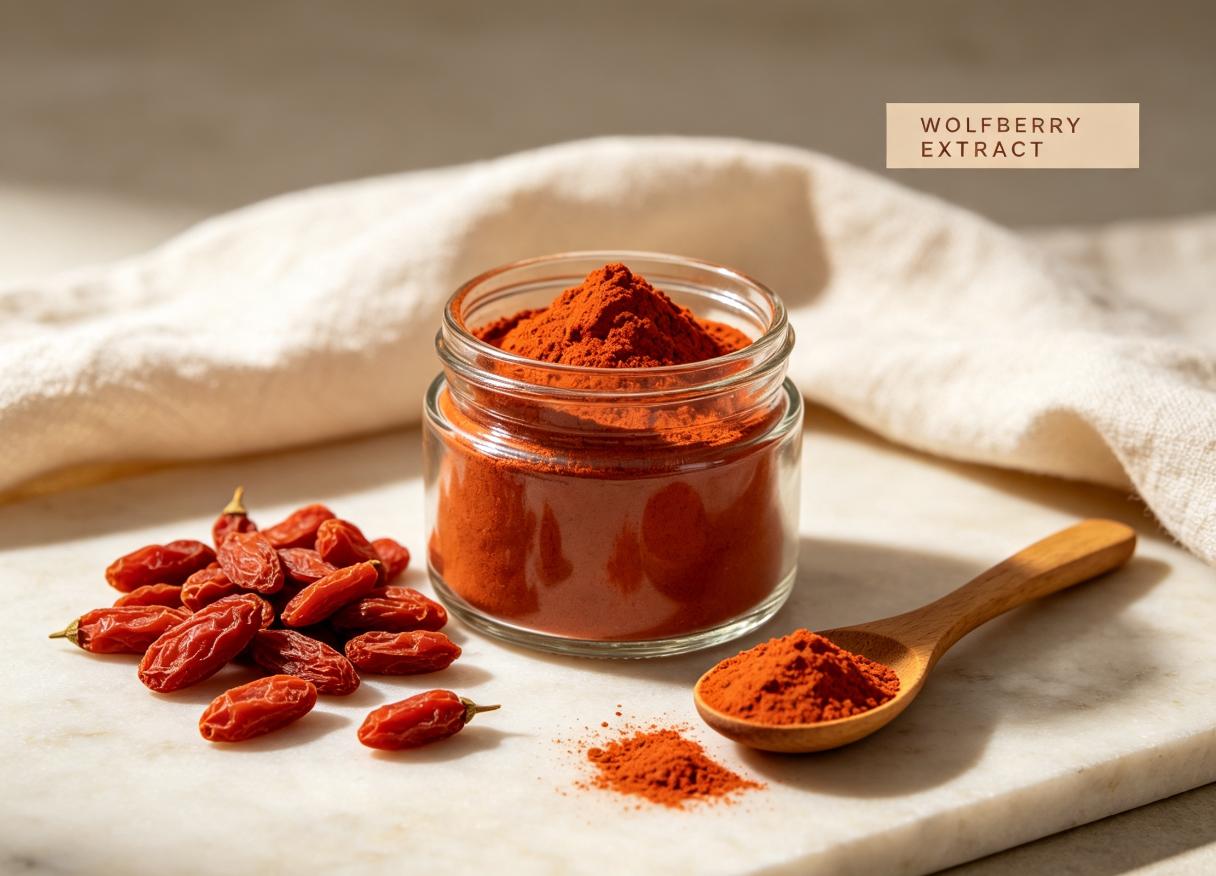
In commercial production, wolfberry extract is available in multiple standardized forms. Common specifications include polysaccharide content ranging from 20% to 60% (UV-tested), with powder extracts typically processed to 80–100 mesh particle size . The extract is light yellow to brown in appearance, water-soluble, and characterized by a mild, slightly sweet taste .
Bioactive Compounds & Standardization
Wolfberry extract’s value is driven by its diverse phytochemical profile. The key bioactive compounds include :
- Polysaccharides (LBP): The primary active marker, responsible for most functional properties
- Carotenoids: Including zeaxanthin, β-carotene, and lycopene
- Phenolic Compounds: Flavonoids, phenolic acids, and phenyl amides
- Alkaloids: Including hyoscyamine and other bioactive amines
- Other Bioactives: Betaine, vitamins (B1, B2, C, E), and essential minerals (potassium, iron, zinc)
Standardization typically focuses on polysaccharide content, with commercial grades available at 20%, 30%, 40%, 50%, and 60% specifications. Higher purity grades (≥40%) are preferred for pharmaceutical and premium supplement applications, while 20–30% grades are suitable for functional foods and beverages .
Core Benefits of Wolfberry Extract
Wolfberry extract has been extensively studied for its wide-ranging biological effects, with findings deriving from in vitro, animal, and emerging clinical evidence .
For immune support and cellular health, the polysaccharide fraction, particularly the glycopeptide LbGp, has demonstrated immunomodulatory and antioxidant properties. Research shows that LbGp can regulate oxidative stress and has been investigated for its potential anti-anxiety effects through the regulation of oxidative stress and ferroptosis pathways in the brain .
For cognitive health and neuroprotection, wolfberry extracts have been studied for their potential in managing neurodegenerative conditions. Studies indicate that wolfberry water extracts may inhibit Aβ₁–₄₂ aggregation—a key factor in Alzheimer’s disease pathology—and demonstrate memory rescue effects in transgenic models .
For vision and eye health, the carotenoid content, particularly zeaxanthin, supports visual health and protects against oxidative damage. This has positioned wolfberry as a leading ingredient in eye health formulations.
For metabolic health, studies suggest potential anti-hyperglycemic, anti-obesity, and hepatoprotective activities, supporting the ingredient’s application in metabolic wellness products .
Main Applications & Uses of Wolfberry Extract
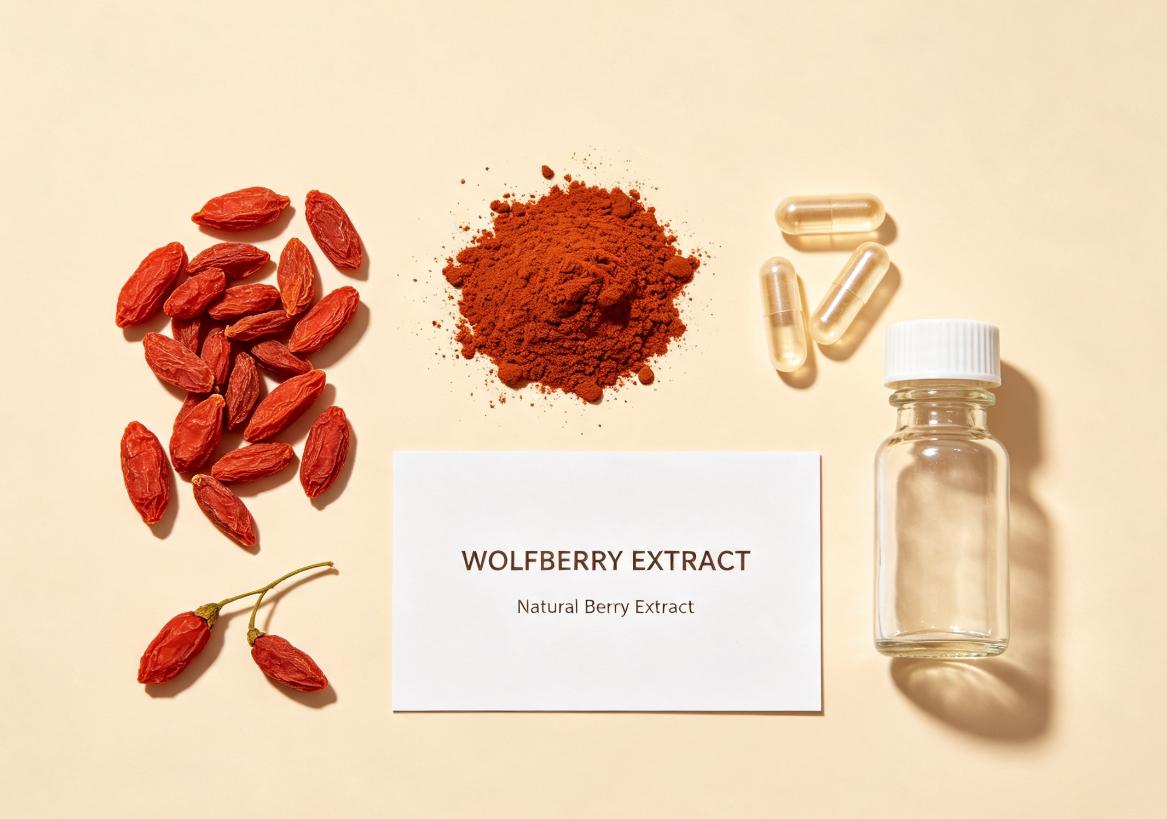
In dietary supplements, wolfberry extract is most commonly used in immune support, vision health, and vitality formulations. It is available in capsules, tablets, and powder sachets, with typical standardized dosages ranging from 100 to 500 mg per serving of polysaccharide-standardized extract. It is often combined with other wellness-support ingredients such as vitamin C, zinc, or other antioxidant botanicals .
In functional foods and beverages, wolfberry extract is used in energy drinks, nutritional bars, wellness teas, and fortified dairy products. Water-soluble powder grades enable easy formulation into ready-to-drink formats and dry blends. Typical usage levels range from 0.05% to 0.3% of the formulation for beverages, depending on the desired color, flavor, and functional profile .
In cosmetics and personal care, wolfberry extract’s antioxidant and skin-protective properties support its use in anti-aging creams, serums, and masks targeting skin vitality and protection from environmental stress .
In animal nutrition, wolfberry extract is increasingly used in livestock and pet nutrition as a natural immune-support ingredient .
Technical Specifications & Sourcing Guide
For professional buyers, the key specifications to verify include polysaccharide content, which typically ranges from 20% to 60% depending on the grade, verified by UV or HPLC testing. The extract is available in powder and granule forms, with powder typically processed to 80–100 mesh particle size for optimal handling and formulation compatibility. Moisture content should be below 5.0%, and ash content below 5.0% to ensure product stability and purity. Heavy metal limits should meet international food supplement standards, with lead and arsenic levels strictly controlled. Microbiological quality must meet USP standards for total plate count, yeast and mold, and absence of Salmonella and E. coli.
The sourcing and processing of wolfberry extract requires careful attention. The fruit is primarily sourced from China, particularly the Ningxia region, which is widely recognized as the premier cultivation area . Leading suppliers offer organic certification, full traceability, and vertically integrated supply chains to ensure consistent quality and competitive pricing .
Quality considerations are critical due to variability in raw material potency. Professional buyers should prioritize suppliers offering batch-specific COA documents confirming polysaccharide content and purity, third-party testing for heavy metals, microbials, and pesticide residues, and full traceability from harvest to final extract .
Why Choose Our Wolfberry Extract
As a professional botanical extract manufacturer, we offer high-quality, standardized wolfberry extract with multiple specification options including 20%, 30%, 40%, 50%, and 60% polysaccharide grades to match your formulation requirements. We provide organic certification available for clean-label formulations, complete COA documentation with HPLC/UV analysis, heavy metals, and microbiological testing for full traceability. Our flexible supply options range from 1kg trial orders to full container shipments, with GMP-certified production and ISO, Halal, and Kosher options available. Our water-soluble powder is suitable for supplements, beverages, functional foods, and cosmetics.
Leave A Comment