
Global formulators and bulk buyers frequently ask what makes Ginkgo Biloba Extract a must-have ingredient for commercial production. The answer lies in its unique dual standardization—24% flavone glycosides and 6% terpene lactones—which has made it one of the most rigorously researched and widely used botanical ingredients for cognitive health, circulation support, and neuroprotective formulations . With the global market valued at approximately USD 1.9 billion in 2026 and projected to reach USD 2.8 billion by 2036 at a CAGR of 4.0%, the demand for high-quality, standardized Ginkgo extract continues to grow .
What Is Ginkgo Biloba Extract?
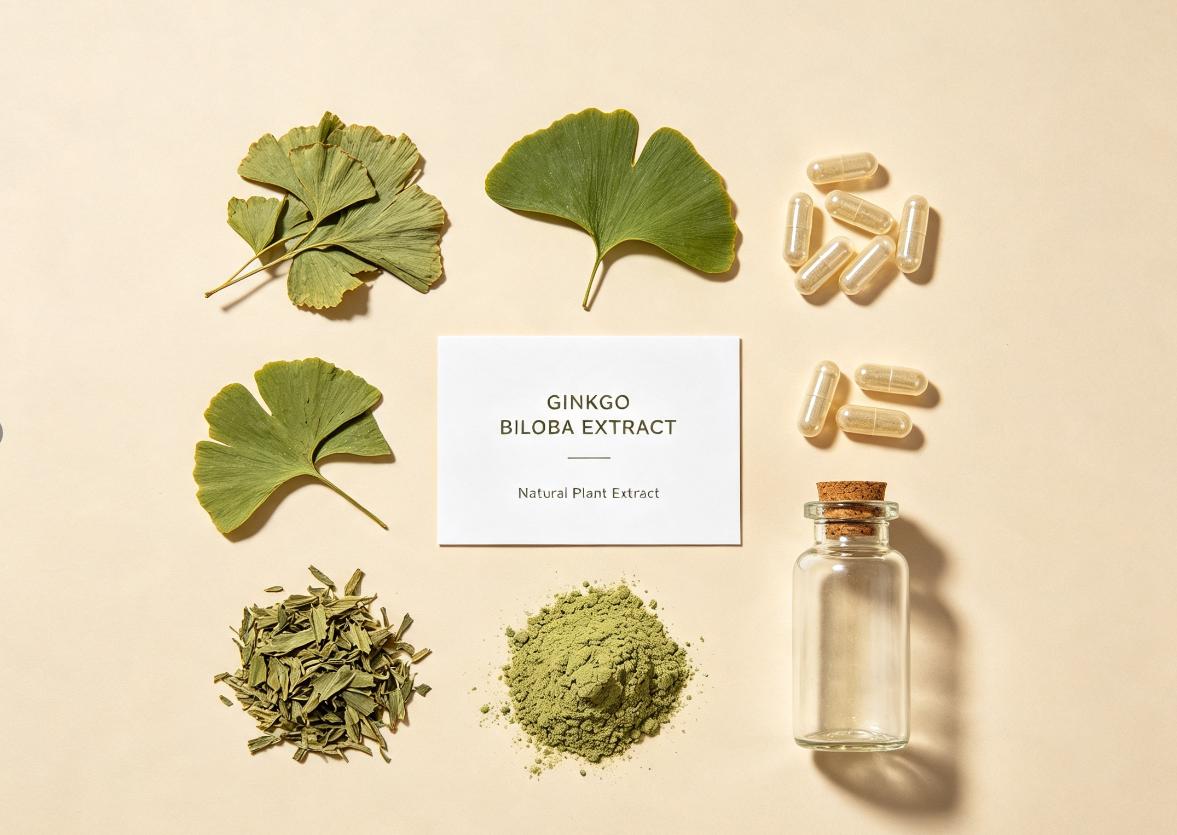
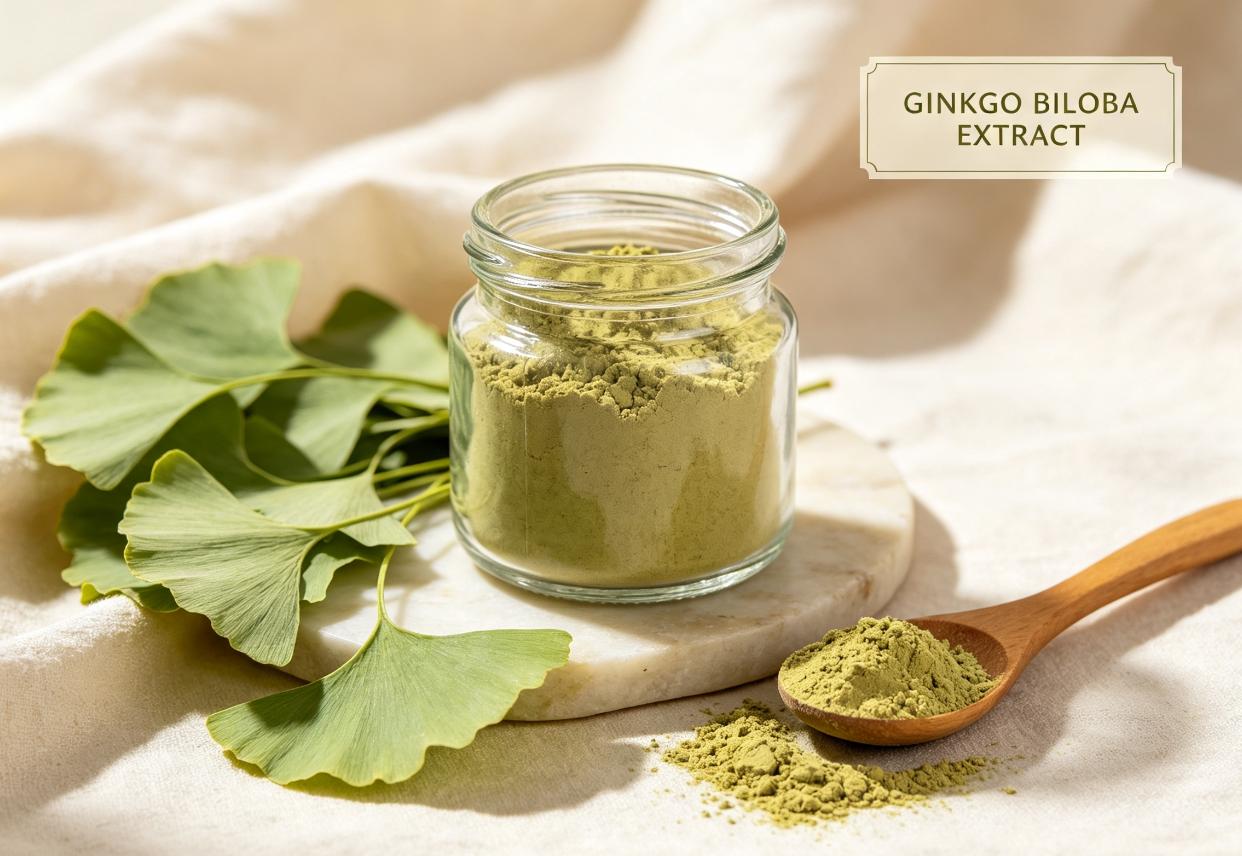
Ginkgo Biloba Extract is a concentrated botanical ingredient derived from the dried leaves of Ginkgo biloba L., one of the oldest living tree species on Earth. The extraction process uses water and ethanol to concentrate the bioactive compounds while removing unwanted substances, producing a light brown to yellowish-brown fine powder.
In commercial production, the industry gold standard is the 24/6 specification: an extract standardized to contain 24% Ginkgo Flavone Glycosides (primarily quercetin, kaempferol, and isorhamnetin) and 6% Terpene Lactones (ginkgolides A, B, C, and bilobalide) . This ratio is not arbitrary—it is the result of extensive pharmacological research to identify and concentrate the key bioactive compounds responsible for Ginkgo’s supportive effects on cerebral blood flow, antioxidant activity, and cognitive function .
Core Specifications & Quality Grades
For professional buyers, understanding specifications is the first step to accurate procurement. The core specifications of Ginkgo Biloba Extract are determined by standardization grade, purity, and intended application .
The 24/6 Standard – Non-Negotiable for Efficacy
Procuring an extract with lower or unspecified potency means your final product may not deliver the expected outcomes cited in clinical studies. This can lead to poor market performance and damage brand trust. Therefore, the Certificate of Analysis (CoA) is your most vital tool. It must provide High-Performance Liquid Chromatography (HPLC) data quantitatively verifying both the total flavone glycosides (at 24%) and the total terpene lactones (at 6%) .
Critical Safety Parameter: Ginkgolic Acid Control
A critical safety parameter common to all major standards is the strict limit on ginkgolic acids, potential allergenic and cytotoxic compounds naturally present in the leaf. Reputable suppliers rigorously control these levels to below 5 ppm (parts per million) as required by USP and European Pharmacopoeia monographs, with premium suppliers achieving <1 ppm for the strictest EU regulations .
Application-Specific Grades
- Not all 24/6 extracts are the same. Depending on your application, you may need different grades:
- Standard USP/EP Grade: Cost-effective, fully compliant with USP and European Pharmacopoeia monographs. Best suited for capsules and tablets .
- Low Acid Grade: Ginkgolic acid controlled to <1 ppm. Essential for high-safety supplements targeting the EU market .
- Water Soluble Grade: Produced through ultrafiltration to remove impurities, resulting in clear amber solutions without sediment. Ideal for functional drinks, liquid shots, and beverage applications .
- CP2015 Grade: Meets Chinese Pharmacopoeia specifications. Suitable for domestic pharmaceutical applications .
Applications & Industrial Value
Ginkgo Biloba Extract is a versatile ingredient with applications spanning multiple industries :
Dietary Supplements & Nutraceuticals
Ginkgo extract is most commonly used in cognitive health, memory support, and circulation wellness formulations. It is available in capsules, tablets, and powder sachets, with typical dosages standardized to deliver 24/6 potency. It is often combined with other cognitive-support ingredients such as Panax Ginseng, Bacopa Monnieri, or Ashwagandha for synergistic blends .
Functional Foods & Beverages
The powder formulation segment accounts for approximately 70% of the global formulation market . Water-soluble grades enable easy incorporation into ready-to-drink formats, wellness shots, and fortified beverages without sedimentation or cloudiness .
Cosmetics & Personal Care
Ginkgo extract’s antioxidant properties support its use in anti-aging creams, serums, and skincare products targeting skin vitality and protection from environmental stress .
Pharmaceutical Applications
Ginkgo extract is included in numerous pharmacopoeias including USP, EP, CP, and is registered with the Korean MFDS, supporting its use in pharmaceutical formulations .
Adulteration Control – A Critical Sourcing Consideration
The Ginkgo extract market has a well-documented problem with adulteration. Unethical suppliers often spike extracts with cheap synthetic rutin or quercetin to pass basic total flavone tests .
The Runke Difference: Reputable suppliers use HPLC Fingerprinting to verify the specific ratio of quercetin, kaempferol, and isorhamnetin. If the peak shape is wrong—showing an unnatural spike in rutin—the batch is rejected . This level of identity verification goes beyond a standard COA and is essential for protecting your brand’s reputation.


Leave A Comment