
Global formulators and bulk buyers frequently ask what makes Astragalus Extract a must-have ingredient for commercial production. The answer lies in its unique combination of bioactive compounds—astragalosides, polysaccharides, and flavonoids—which have made it one of the most researched botanical ingredients for immune support, healthy aging, and adaptogenic formulations. With the global nutraceutical and cosmetic industries increasingly focused on natural, scientifically-backed ingredients, demand for high-quality, standardized astragalus extract is growing steadily across multiple sectors.
What Is Astragalus Extract?
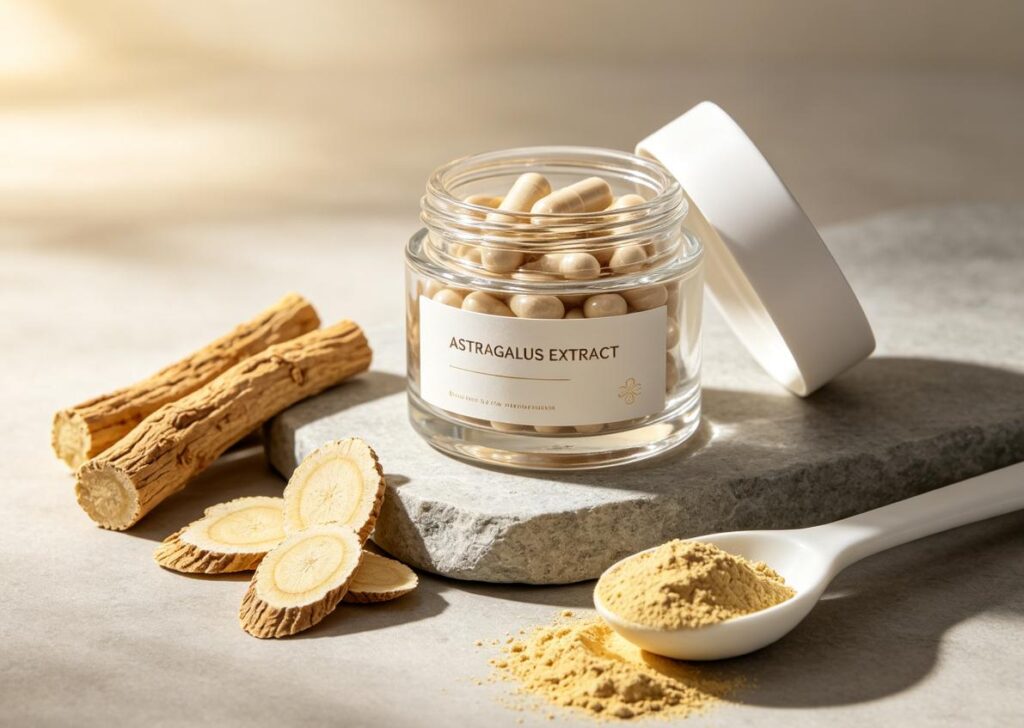
Astragalus Extract is a concentrated botanical ingredient derived from the dried root of Astragalus membranaceus (also known as Astragalus mongholicus), a plant native to northern China and parts of Mongolia that has been used in Traditional Chinese Medicine for over 2,000 years . The extract is valued for its naturally occurring bioactive compounds, including astragalosides (triterpene saponins), polysaccharides, and flavonoids .
In commercial production, astragalus extract is available in multiple standardized forms. Common specifications include astragaloside IV content ranging from 1% to 98% (HPLC-verified) and polysaccharide content from 10% to 70% (UV-verified), with the extract ratio grades available from 4:1 to 100:1 . The extract appears as a light yellow to brown fine powder with a characteristic herbal aroma.
Core Specifications & Quality Grades
For professional buyers, understanding specifications is the first step to accurate procurement. The core specifications of astragalus extract are determined by active marker content, intended application, and extraction method.
Standardization Options
The two primary standardization pathways are astragaloside IV (HPLC) and polysaccharides (UV). The 16% polysaccharide grade is a common specification for immune-support formulations, with one commercial extract of this standardization demonstrating significant immunomodulatory activity in both in vitro and in vivo studies . Higher astragaloside IV grades (10% to 98%) are typically preferred for pharmaceutical and premium nutraceutical applications where precise marker control is critical. For dietary supplements and functional foods, polysaccharide-standardized grades (20% to 40%) offer a cost-effective balance of potency and cost, while ratio extracts (4:1, 10:1, 20:1) provide a full-spectrum profile suitable for traditional capsules and powder blends.
Astragalus extract is also available in organic certified grades with USDA or EU certification, water-soluble grades for beverage applications and liquid formulations, and fine cuts for use in traditional teas and soups . A reliable specification sheet should clearly state the standardization basis—astragaloside IV (HPLC), polysaccharides (UV), or ratio—to ensure comparability across batches and suppliers. Batch-specific COA documentation should confirm the active marker content, heavy metals, and microbiological safety for every shipment .
Key Quality Indicators
When evaluating suppliers, professional buyers should verify:
-
Active marker content (astragaloside IV % by HPLC or polysaccharides % by UV)
-
Heavy metal limits (lead, arsenic, cadmium, mercury)
-
Pesticide residue testing
-
Microbiological purity (total plate count, absence of pathogens)
The region of origin matters significantly. China remains the dominant force in astragalus extract production, with Shaanxi Province recognized as the epicenter of processing due to its ideal climate, rich soil composition, and deep-rooted expertise in Traditional Chinese Medicine. Over 80% of commercial-grade astragalus extract originates from specialized manufacturers in this region, which offers vertically integrated operations from farming to extraction, purification, drying, and packaging .
Core Benefits of Astragalus Extract
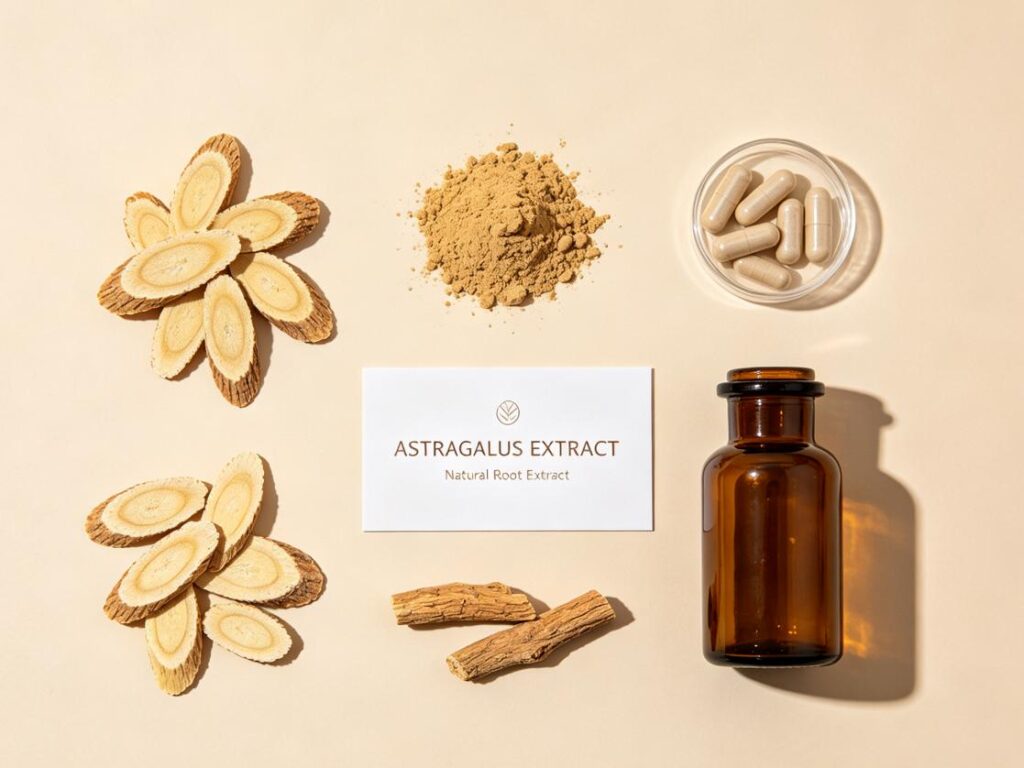
Astragalus extract has been extensively studied for its wide-ranging biological effects, with findings derived from in vitro, animal, and emerging clinical evidence.
For immune support and immunomodulation, a 2026 study published in Planta Medica demonstrated that a polysaccharide-rich aqueous extract of Astragalus mongholicus (CPSP-01, containing 8% polysaccharides) strengthened the microbicidal ability of macrophages against fungal, bacterial, and viral infections. The oral administration of the extract to aged mice promoted the microbicidal activity of macrophages against C. albicans, S. pneumoniae, and Poly(I:C), while dampening inflammation (reduced plasmatic SAP and urinary PGE2 levels) and oxidative status (reduced 8-isoprostane urinary level) . Research also shows that astragalus extract can increase the activity of several kinds of white blood cells and boost production of antibodies and interferon .
For healthy aging and skin health, a systematic review of studies from 2015-2025 highlighted that astragalus and its bioactive constituents—astragaloside IV, cycloastragenol, flavonoids, and polysaccharides—promote antioxidant, anti-inflammatory, and photoprotective effects that positively impact skin aging . The research found that astragalus can promote type I collagen production and reduce collagen breakdown by influencing signaling pathways involved in skin remodeling. Some components appear to reduce enzymes that degrade collagen, like matrix metalloproteinase-1 (MMP-1), especially in UV-stressed skin .
Astragalus-related compounds may also reduce UVA-related oxidative damage, preserve mitochondrial membrane function, and support skin energy production—all of which may translate to healthier cellular aging over time. Clinical trials reported improvements in skin hydration, tone, and wrinkle reduction . Astragalus may also influence melanogenesis signaling, potentially affecting pigmentation depending on formulation and context .
For metabolic and cardiovascular health, a 2024 review of 20 studies (involving 953 adults with type 2 diabetes) found that taking astragalus in addition to the medicine metformin reduced fasting blood glucose and hemoglobin A1C more than metformin alone . A 2023 review of 19 studies (involving 1,094 participants) found that astragalus enhanced immune responses and reduced levels of proinflammatory cytokines . Research also suggests potential benefits for supporting cardiovascular health and maintaining overall vitality .
For inflammation and oxidative stress, a 2023 study published in the International Journal of Molecular Sciences investigated the role of an astragalus extract standardized to 16% polysaccharides in regulating the immune-inflammatory response. The extract inhibited prostaglandin E2 and leukotriene C4 production and reduced interleukin-1β, tumor necrosis factor-α, and nitrite production, affecting inducible nitric oxide synthase expression .
For telomere support and longevity, data suggest telomere-protective effects under oxidative challenge, pointing to the potential of astragalus to shield the protective caps that prevent chromosomes from fraying, tangling, or fusing with neighboring chromosomes during cell division .
For animal studies on immune recovery, a standardized herbal formulation containing astragalus extract (HT042) was shown to restore innate and adaptive immune cell populations and regulate immunomodulatory cytokines in a cyclophosphamide-induced immunosuppression mouse model, demonstrating faster recovery of body weight and immune function .
Applications & Industrial Value
Astragalus extract is a versatile ingredient with applications spanning multiple industries.
In dietary supplements and nutraceuticals, astragalus extract is most commonly used in immune support, adaptogen, and vitality formulations. It is available in capsules, tablets, powder sachets, and gummies, with typical dosages ranging from 100 to 500 mg per serving of polysaccharide-standardized extract. It is often combined with other adaptogenic herbs such as ashwagandha, rhodiola, or eleuthero for synergistic stress-support blends .
In functional foods and beverages, astragalus extract is used in teas, powdered drinks, wellness shots, and fortified products. Water-soluble grades enable easy incorporation into instant drink mixes and liquid formulations. Traditional consumption of astragalus in teas, soups, and herbal formulas has been adapted into modern formats such as gummies and functional beverages .
In cosmetics and personal care, astragalus extract’s antioxidant, anti-inflammatory, and skin-protective properties support its use in anti-aging serums, moisturizers, sunscreens, and barrier-support formulations. The compound may serve as a supportive add-on for photoaging and skin-barrier health .
In animal nutrition and veterinary applications, astragalus extract is increasingly used in pet nutrition and livestock feed to support immune health and overall animal vitality.
Bioavailability & Formulation Considerations
Astragalus extract is generally well-absorbed, but the bioavailability of its active compounds depends on the extraction method and delivery system. Water and ethanol extractions are the most common methods for nutraceutical-grade extracts, while supercritical CO₂ extraction preserves heat-sensitive compounds for premium applications .
Key formulation considerations include:
-
Dosage forms: Capsules, tablets, gummies, powders, beverages, and topical formulations
-
Synergistic pairings: Works well with echinacea, reishi mushroom, schisandra, eleuthero, and rhodiola rosea
-
Stability: Store in a cool, dry, dark place to maintain potency
-
Shelf life: 24–36 months under proper storage conditions
Safety & Regulatory Status
Astragalus is generally recognized as safe when used orally, with up to 60 grams per day for up to 4 months not appearing to cause adverse effects . However, important considerations for downstream manufacturers include:
Cautions and warnings: Astragalus may worsen symptoms of autoimmune diseases, so formulations should include appropriate warnings. It may interact with medications that suppress the immune system . Little is known about safety during pregnancy or breastfeeding, with some animal research suggesting potential fetal toxicity . People with autoimmune conditions should consult their physician before use .
Regulatory status: Astragalus extract is widely accepted as a dietary supplement ingredient in North America, Europe, and Asia. Premium extracts are available with ISO 22000, GMP, HACCP, Halal, Kosher, and organic certifications . For cosmetic applications, it is listed in the CosIng database in the EU.
Quality documentation: A responsible supplier should provide batch-specific COA documents confirming active marker content, heavy metals, pesticide residues, and microbiological safety.
Why Choose Our Astragalus Extract
As a professional botanical extract manufacturer, we offer high-quality, standardized astragalus extract with multiple specification options including astragaloside IV grades (1% to 98% HPLC) and polysaccharide grades (10% to 70% UV). We provide organic certified grades with EU/USDA certification, water-soluble grades for beverage applications, ratio extracts (4:1, 10:1, 20:1), and fine cuts for traditional formulations. Our products offer full traceability with complete COA documentation including heavy metals, microbiological, and pesticide testing, and flexible supply from trial orders to full container shipments. We maintain GMP-certified production with ISO, Halal, and Kosher certifications available, and provide regulatory support with comprehensive documentation for global market submissions.
Ready to try Astragalus Extract? for your business? Contact us at info@xianherb.com for a free sample or wholesale price list.
Leave A Comment