
Global formulators and bulk buyers frequently ask what makes Rhodiola Rosea Extract a must-have ingredient for commercial production. The answer lies in its reputation as a premier adaptogen—a botanical substance believed to help the body resist physical, chemical, and biological stress . With a long history in traditional medicine across Russia, Scandinavia, and China, modern interest in Rhodiola rosea extract is driven by its potential applications in sports nutrition, cognitive health, and stress-management formulations .
What Is Rhodiola Rosea Extract?
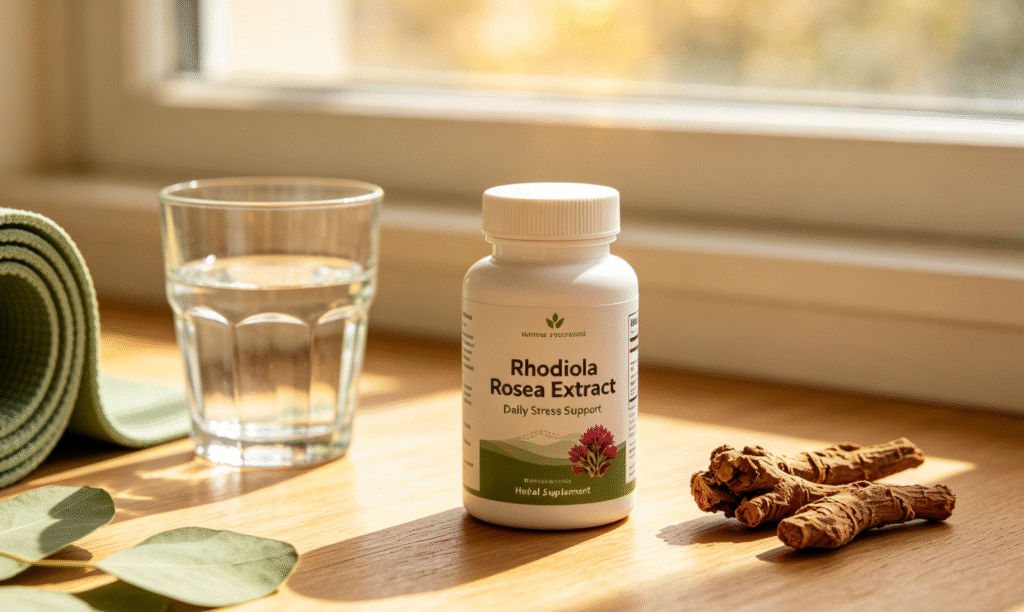
Rhodiola Rosea Extract is a concentrated botanical ingredient derived from the dried roots and rhizomes of Rhodiola rosea L., a perennial plant that grows in cold, high-altitude regions of the Arctic, Central Asia, and mountainous parts of Europe . It is also known by several names, including golden root, arctic root, and rose root . The extract is valued for its naturally occurring bioactive compounds, primarily salidroside and rosavins (a group of compounds including rosavin, rosarin, and rosin), which serve as the key quality markers for standardization and formulation consistency .
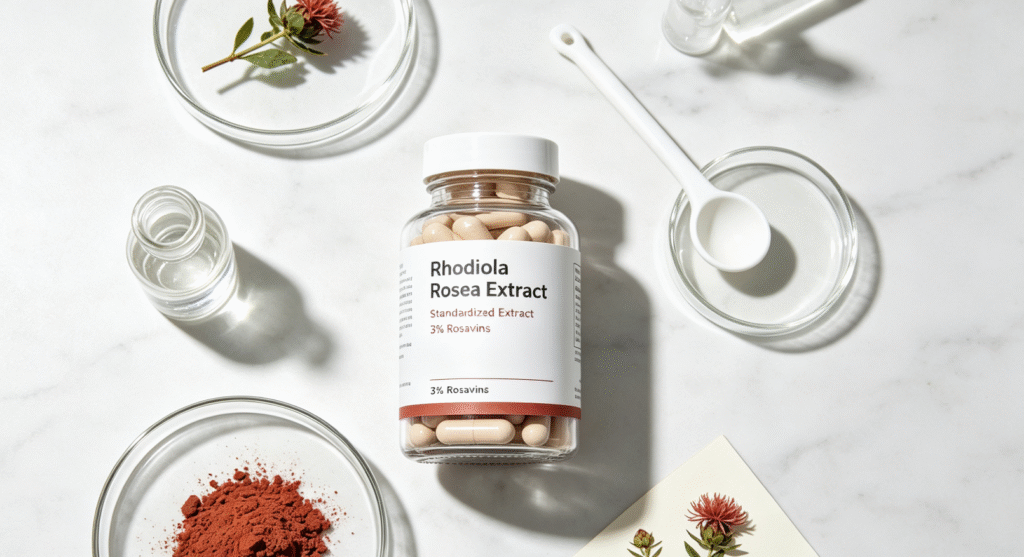
Commercially, Rhodiola rosea extract is available in multiple standardized grades, typically specified by the ratio of salidroside to rosavins. The most common commercial specification is 1% salidroside and 3% rosavins, which aligns with requirements set by the European Pharmacopoeia (EP) and USP benchmarks . The extract appears as a brown to reddish-brown fine powder with a characteristic aroma . For cosmetic applications, it is also available in liquid forms suitable for skincare formulations.
Core Specifications & Sourcing Guide
For professional buyers, evaluating Rhodiola rosea extract requires verifying multiple quality parameters to ensure consistency and potency.
Key Specifications to Verify
-
Active Markers: The primary quality markers for Rhodiola rosea extract are Salidroside and the Rosavins group. A 1% Salidroside / 3% Rosavins specification is the industry standard .
-
Appearance: Brown to reddish-brown fine powder .
-
Particle Size: Typically 100% passes through an 80-mesh sieve .
-
Loss on Drying: Maintained below 5.0% to ensure product stability .
-
Heavy Metals: Critical for safety compliance, with limits such as Pb ≤ 3 mg/kg, As ≤ 1 mg/kg, Hg ≤ 0.1 mg/kg, and Cd ≤ 1 mg/kg .
-
Microbiological Quality: Total plate count, yeast and mold limits, and absence of pathogens like Salmonella and E. coli .
Regional Manufacturing and Procurement
China plays a significant role in the global supply chain for Rhodiola rosea extract, with production concentrated in specialized biotech firms in provinces like Shaanxi, Hunan, and Sichuan . Facilities in these regions often have access to alpine-grown raw materials, particularly from the Tibetan Plateau, and are equipped with advanced extraction infrastructure . Many manufacturers operate under ISO 9001-certified systems and maintain in-house HPLC testing labs, enabling them to provide rapid batch validation .
Supplier Evaluation: When selecting a supplier, professional buyers should look for more than just certificates. A comprehensive assessment should include an evaluation of operational transparency, responsiveness, and performance metrics such as on-time delivery and reorder rates . Requesting Certificates of Analysis (CoA) that detail the concentration of salidroside and rosavins, heavy metal content, solvent residues, and microbial limits is essential . While cost is a factor, it should not be the sole decision point. Prices for Rhodiola rosea extract can vary widely based on purity, volume, and form, ranging from entry-level powders at under $10/kg to premium high-purity extracts exceeding $190/kg .
Quality and Sourcing Considerations
One of the primary considerations when sourcing Rhodiola rosea extract is its chemical variability. A supplier’s quality assurance protocols are crucial to ensure batch-to-batch consistency. Reputable suppliers offer products with a standardized “fingerprint” composition, guaranteeing that the extract consistently provides the full spectrum of nutrients found in the root . Advanced suppliers may also employ unique identification methods, such as barcode DNA or PCR sequencing, to verify the authenticity of the raw material .
Applications & Industrial Value
Rhodiola rosea extract is a versatile ingredient with applications spanning multiple industries.
In dietary supplements and nutraceuticals, Rhodiola rosea extract is most commonly used in formulations targeting stress resilience, energy, and cognitive performance. It is available in capsules, tablets, and powder sachets. Typical dosages in commercial supplements vary, but a common recommendation is 200-600 mg per day of an extract standardized to 1% salidroside and 3% rosavins. It is frequently combined with other adaptogens, such as Ashwagandha, for synergistic stress-support blends .
In functional foods and beverages, the extract is used in energy drinks, wellness shots, and performance-oriented products. Its adaptogenic properties make it a candidate for beverages aimed at reducing mental and physical fatigue. Water-dispersible or readily soluble grades facilitate formulation into liquid products .
In cosmetics and personal care, Rhodiola rosea extract is valued for its antioxidant and anti-aging properties, contributing to its use in creams, serums, and lotions aimed at protecting skin from environmental stressors .
Clinical Evidence and Market Drivers
Despite its long history of use, scientific evidence for many of Rhodiola’s claimed health benefits is mixed. While some small studies suggest it may improve exercise performance and reduce mental fatigue, a recent review by the MSD Manual, a leading medical resource, concluded that no high-quality studies demonstrate Rhodiola is effective for treating any health condition . Key findings from studies include:
-
Exercise Performance: Some randomized trials, including a 2025 study, suggest that acute Rhodiola supplementation may have small, outcome-specific benefits on parameters like mean power during anaerobic exercise or bar velocity during resistance training .
-
Stress and Fatigue: Some research indicates Rhodiola may help reduce stress-related fatigue. The therapeutic effect is thought to be linked to its influence on the neuroendocrine-immune complex, which regulates other pharmacological systems .
-
Safety: For most people, taking Rhodiola rosea extract twice daily for up to 12 weeks appears safe. However, potential side effects include dizziness, dry mouth, and excessive salivation .
Why Choose Our Rhodiola Rosea Extract
As a professional botanical extract manufacturer, we offer high-quality, standardized Rhodiola Rosea Extract that meets the most rigorous industry standards. Our product is standardized to the key active markers, Salidroside (≥1%) and Rosavins (≥3%), ensuring batch-to-batch consistency and reliable formulation performance. We offer multiple specification options, including customized ratios, to match your unique product requirements. Our extracts are water-soluble for beverage applications and available in cosmetic-compatible formulations. We provide full traceability with complete COA documentation, including heavy metals, microbiological, and pesticide testing, and offer flexible supply from trial orders to full container shipments. Our production is GMP-certified, with ISO, Halal, and Kosher certifications available.
Ready to try Rhodiola Rosea Extract for your business? Contact us at info@xianherb.com for a free sample or wholesale price list.
Leave A Comment