
Global formulators and bulk buyers frequently ask what makes Pine Bark Extract a must-have ingredient for commercial production. The answer lies in its exceptional antioxidant profile—particularly its oligomeric proanthocyanidins (OPCs)—which have made it one of the most researched botanical ingredients for cardiovascular health, skin protection, and cognitive support formulations. With the global market continuing to expand across nutraceutical, cosmetic, and functional food applications, demand for high-quality, standardized pine bark extract is growing steadily.
What Is Pine Bark Extract?
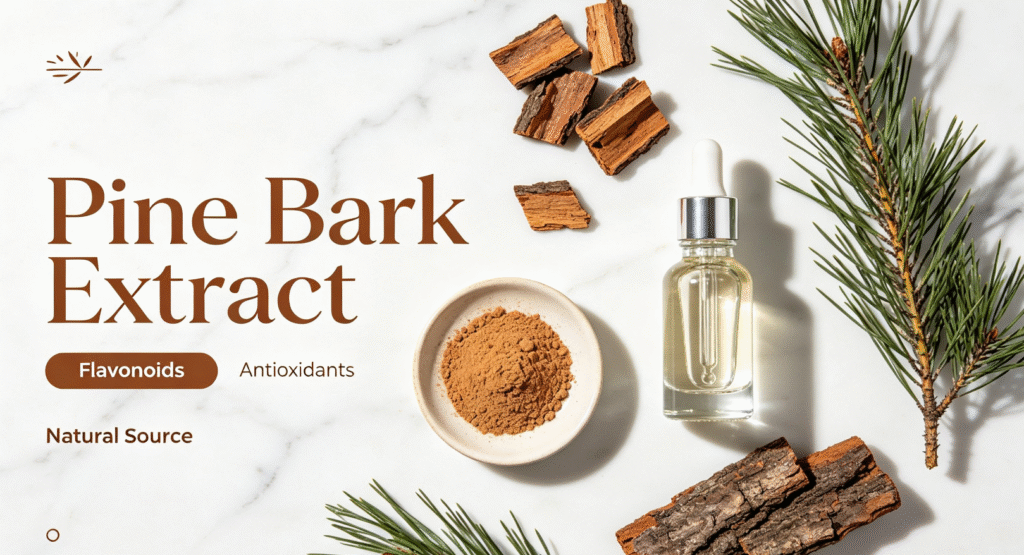
Pine Bark Extract is a concentrated botanical ingredient derived from the inner bark of various pine species, primarily Pinus massoniana (Chinese red pine) and Pinus pinaster (French maritime pine). The extract is valued for its naturally occurring proanthocyanidins, a class of flavonoids known for their powerful free radical-scavenging activity and ability to support collagen cross-linking.
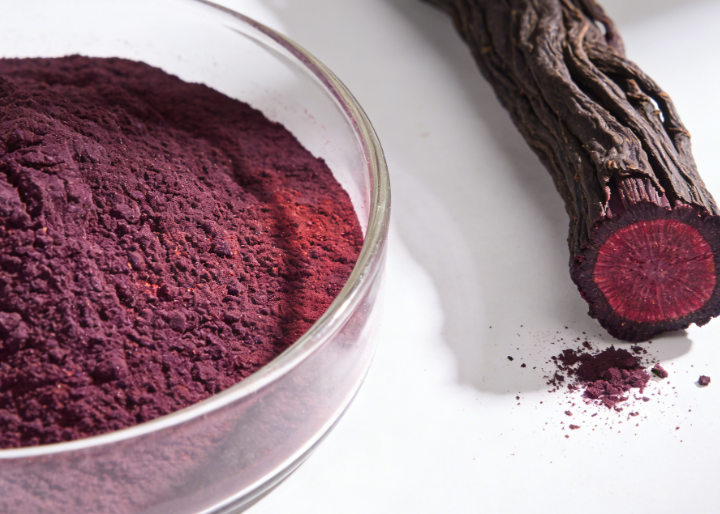
The extract appears as a reddish-brown to brown fine powder with a characteristic odor and astringent taste. It is water-soluble and available in multiple standardized forms. The most common commercial specification is proanthocyanidins content of 95% by UV, with higher-purity grades reaching up to 98% for premium nutraceutical applications.
Core Specifications & Quality Grades
For professional buyers, understanding specifications is the first step to accurate procurement. The core specifications of pine bark extract are determined by proanthocyanidin content, purity, source species, and intended application.
The 95% Standard – Industry Benchmark
The industry gold standard is 95% or higher proanthocyanidins by UV, with grades also available at 70%, 80%, and 90% specifications. The proanthocyanidin content directly correlates with antioxidant activity and formulation performance. Standardized extracts should also specify the degree of polymerization (mDP), which typically ranges from 4 to 6 for high-quality material.
Pycnogenol vs. Generic Pine Bark Extract
One of the most critical sourcing decisions is distinguishing between patented and generic extracts. Pycnogenol is a patented extract from French maritime pine grown along the southwest coast of France, with extensive clinical research documentation and a significantly higher price point. Generic pine bark extract can come from multiple Pinus species, primarily Pinus massoniana from China, and can be standardized to the same 95% proanthocyanidins content at a much lower cost.
For brands that need to make specific structure-function claims tied to published human trials, Pycnogenol is the only option because those trials used the patented extract. For brands that want a high-quality antioxidant ingredient without claims tied to specific studies, a well-sourced generic pine bark extract is a perfectly legitimate choice.
Application-Specific Grades
Not all pine bark extracts are the same. Depending on your application, you may need different grades. The 95% proanthocyanidins supplement grade is best suited for capsules, tablets, and powder blends for dietary supplements. This is the most common commercial specification and offers the highest potency-to-cost ratio. The 70% to 80% proanthocyanidins beverage grade is produced with improved solubility for functional beverages, protein powders, and liquid formulations. The lower proanthocyanidin content allows for better dispersion without sedimentation. The cosmetics grade is optimized for skin absorption profile, particle size, and solubility in cosmetic bases for use in anti-aging serums, sunscreen formulations, and hair care products. Low-grade fractions are used in agricultural applications as natural pesticide alternatives and soil amendments.
Critical Quality Parameters
The most critical procurement parameter is proanthocyanidin content, with 95% minimum for supplement grades directly correlating with antioxidant activity and label claims. Batch-specific HPLC data should be provided because UV alone is less precise and HPLC confirms compound profile. Species disclosure as Pinus massoniana or Pinus pinaster is essential for regulatory documentation and supply chain integrity. Loss on drying should be 5.0% or less to prevent moisture-induced degradation. Heavy metal limits must meet international standards with lot-specific data required. Solvent residue should be 0.1% ethanol or less to ensure extraction purity. Particle size of 100% through 80 mesh ensures formulation compatibility, and microbiological quality must meet USP standards.
Core Benefits of Pine Bark Extract
Pine bark extract has been extensively studied for its wide-ranging biological effects, with findings derived from in vitro, animal, and clinical evidence.
For cardiovascular health, the proanthocyanidins in pine bark extract support vascular function through multiple mechanisms. Research has demonstrated that pine bark extract can improve endothelial nitric oxide synthase activity and enhance nitric oxide production, which contributes to vasodilation and healthy blood flow. The extract also inhibits the production of adhesion proteins that promote inflammation and atherosclerosis by blocking NF-κB activation driven by tumor necrosis factor-alpha.
For skin health and anti-aging, pine bark extract supports collagen cross-linking, reduces UV-induced erythema, and promotes skin elasticity. The proanthocyanidins protect against photoaging by neutralizing free radicals and supporting the skin’s natural defense mechanisms. Clinical studies have shown that pine bark extract can reduce UV-induced redness by up to 55% at 0.5% inclusion in topical formulations.
For antioxidant protection, pine bark extract exhibits an ORAC value of 30,000 micromole Trolox equivalents per gram, making it one of the most potent natural antioxidants available. It also regenerates vitamins C and E, prolonging their antioxidant activity and providing sustained cellular protection.
For cognitive health, research suggests that pine bark extract may support memory and cognitive function by improving blood flow to the brain and reducing oxidative stress in neural tissue.
For sports nutrition, clinical studies have demonstrated that supplementation with pine bark extract can improve aerobic performance, with athletes showing an 8% increase in VO₂max and a 40% acceleration in blood lactate clearance.
For anti-inflammatory support, the proanthocyanidins in pine bark extract have been shown to reduce inflammation by modulating the NF-κB pathway and inhibiting pro-inflammatory cytokines.
Applications & Industrial Value
Pine bark extract is a versatile ingredient with applications spanning multiple industries.
In dietary supplements and nutraceuticals, pine bark extract is most commonly used in cardiovascular health, antioxidant, and skin health formulations. It is available in capsules, tablets, and powder sachets, with typical dosages ranging from 80 to 240 milligrams per serving of 95% proanthocyanidin-standardized extract. It is often combined with other antioxidant ingredients such as grape seed extract, vitamin C, or CoQ10 for synergistic blends.
In functional foods and beverages, pine bark extract is emerging as a fortifying ingredient for performance-oriented products such as protein powders, wellness shots, and functional drinks. The water-soluble fraction works well in applications where antioxidant labeling is relevant, though the astringent, woody flavor profile limits inclusion rates in beverages. Water-soluble powder grades enable easy formulation into dry blends and liquid applications.
In cosmetics and personal care, pine bark extract’s antioxidant, photoprotective, and collagen-supporting properties support its use in anti-aging serums, sunscreens, moisturizers, and hair care products. Cosmetic-grade material requires different specifications than supplement-grade material, including skin absorption profile, particle size, and solubility in cosmetic bases.
In agriculture, pine bark-derived compounds are used as natural pesticide alternatives and soil amendments, representing a smaller but real application for lower-grade extract fractions.
Global Market & Supply Chain Insights
China remains the dominant force in pine bark extract production, with Shaanxi Province emerging as the epicenter of manufacturing. Over 80% of leading suppliers are concentrated in this region, benefiting from abundant natural resources—particularly Pinus massoniana—and decades of investment in extraction technology and GMP-compliant facilities. The cluster effect in Shaanxi enables economies of scale, specialized expertise in flavonoid isolation, and integrated logistics near Xi’an International Port for streamlined export operations.
Key global trade signals for 2024 show that top exporting countries include India with $539.8 million, the United States with $282.3 million, Spain with $274.6 million, and Germany with $188.3 million. Top import demand countries include the United States with $1.14 billion, South Korea with $216.6 million, and Germany. China export price ranges for pine bark extract in 2026 sample transactions ranged from $7.38 to $34.80 per kilogram. These figures confirm that pine bark extract supply is highly globalized, with strong demand in North America, Europe, and Asia.
Why Choose Our Pine Bark Extract
As a professional botanical extract manufacturer, we offer high-quality, standardized pine bark extract with 95% proanthocyanidins standardization guaranteed by UV with HPLC verification available. We provide multiple source options including Pinus massoniana and Pinus pinaster grades, available in powder, water-soluble, and cosmetic-grade formulations. Our products offer full traceability with complete COA documentation including heavy metals, microbiological, and pesticide testing, and flexible supply from 1 kilogram trial orders to full container shipments. We maintain GMP-certified production with ISO, Halal, and Kosher certifications available, and provide regulatory support with comprehensive documentation for global market submissions.
Ready to try Pine Bark Extract for your business? Contact us at info@xianherb.com for a free sample or wholesale price list.




Leave A Comment