
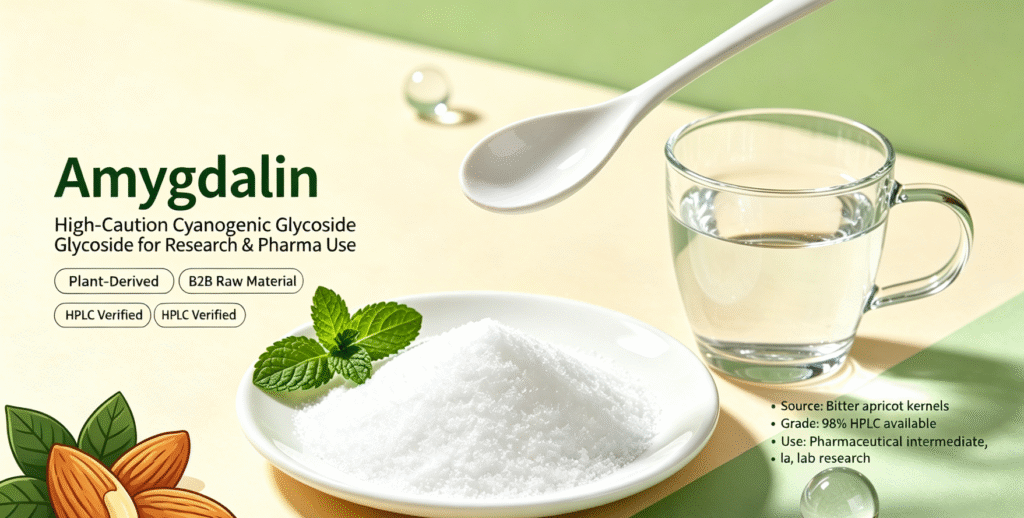
 Amygdalin, a well‑known cyanogenic glycoside extracted primarily from bitter apricot kernels, stands as one of the most widely‑studied plant‑derived bioactive compounds. For hundreds of years, bitter apricot seeds containing amygdalin have been applied in traditional herbal practice for respiratory support. In modern times, amygdalin draws continuous attention from pharmacology labs, formulation developers and raw‑material researchers for its complex chemical properties, pharmacological potentials and critical safety considerations.
What Is Amygdalin?
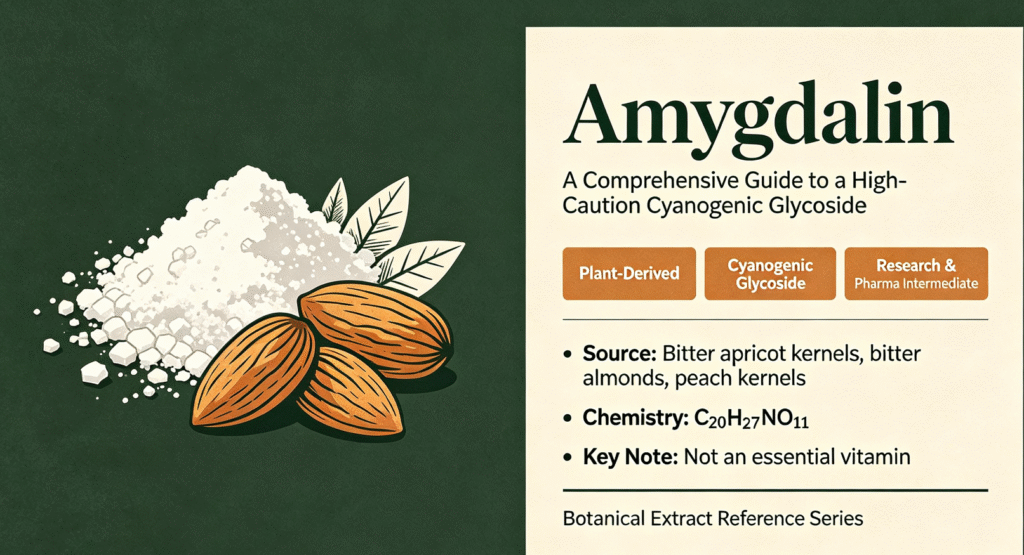
Chemically, amygdalin (C₂₀H₂₇NO₁₁) is a diglucoside belonging to the cyanogenic glycoside family. It is naturally concentrated in the seeds of stone‑fruit plants: bitter apricot kernels, bitter almonds, peach kernels, plum and loquat seeds. Bitter apricot kernel serves as the dominant commercial source, where amygdalin content reaches 2%‑4%, dozens‑fold higher than sweet almond varieties.
Structurally, amygdalin consists of mandelonitrile bound with two glucose molecules. When exposed to β‑glucosidase enzymes from plant tissue or human gut microbiota, it hydrolyzes and yields glucose, benzaldehyde and hydrogen cyanide (HCN). Pure amygdalin appears as white crystalline powder. Standard commercial grades commonly reach 98% assay by HPLC.
Important terminology clarification:
- Amygdalin: Natural plant‑extracted cyanogenic glycoside
- Laetrile: Semi‑synthetic derivative of amygdalin
- “Vitamin B17”: Pure marketing nickname; amygdalin is NOT an essential human vitamin and receives zero recognition from nutrition science authorities.
Mechanism of Action: Pharmacology Beyond HCN Release
Amygdalin itself exhibits low acute toxicity; risks mainly arise from metabolites generated after enzymatic breakdown inside gastrointestinal tract.
Respiratory‑Suppressing Activity (Traditional Core Mechanism)
Trace hydrogen cyanide generated from controlled low‑dose hydrolysis mildly depresses the over‑excited respiratory center. This physiological effect forms the theoretical basis for its historical application to ease cough and asthma symptoms in traditional herbal systems. It helps calm hyperactive respiration without complete nerve suppression, only functional within very narrow safe‑dose windows.
Anti‑Inflammatory & Antioxidant Properties
In‑vitro and animal research demonstrates amygdalin can scavenge reactive oxygen free radicals, modulate inflammatory mediator release and inhibit over‑activation of inflammatory signaling pathways. These findings support further lab exploration for inflammation‑related model studies, though human clinical evidence remains limited.
Analgesic & Immunomodulatory Potential
Benzaldehyde, one key hydrolysate of amygdalin, delivers mild analgesic effects. Multiple animal trials indicate amygdalin may regulate cytokine profiles and adjust immune‑cell activity. It should be emphasized these are pre‑clinical observations, not validated human therapeutic claims.
Clarification on Anti‑Tumor Research
Historically, amygdalin / Laetrile was heavily promoted as alternative anti‑cancer therapy. However, large‑scale human clinical trials organized by NCI and global health authorities found no reliable clinical proof of anti‑cancer efficacy in human subjects. Oral ingestion carries substantial cyanide‑poisoning risk. It is critical to separate lab cell‑level observations from proven real‑world human treatment effects.
Research‑Observed Biological Effects
Respiratory Comfort (Traditional Herbal Application)
For generations, processed bitter apricot kernel formulations containing controlled‑level amygdalin were prescribed for dry cough and wheezing relief under professional herbal guidance. This strictly requires low‑dose, processed raw‑material usage; raw bitter apricot seeds must never be self‑administered by consumers.
Anti‑Oxidative and Anti‑Inflammatory Laboratory Outcomes
Pre‑clinical data shows amygdalin mitigates oxidative stress and lowers inflammatory markers in animal models. It attracts interest for experimental formulation research targeting chronic inflammatory conditions, yet human clinical data is insufficient for commercial functional‑food claims.
Fibrosis‑Related Experimental Research
Several animal studies explore amygdalin’s impact on organ‑fibrosis markers. Further controlled trials are required before any practical product application.
Safety, Toxicity & Dosage Considerations
Core Safety Warning
Amygdalin powder is a high‑risk raw material. While parenteral injection presents relatively lower hazard, oral administration carries significant cyanide‑poisoning risk, catalyzed by β‑glucosidase from gut bacteria. Poisoning symptoms include headache, dizziness, nausea, dyspnea, hypotension, loss of consciousness and fatal respiratory paralysis in severe overdose casesPMC.
- Toxic risk varies individually, strongly affected by gut‑microbiome composition. Germ‑free‑animal studies confirm gut microbiota largely determines cyanide generation after oral intakeNCI.
- No universal safe oral‑supplement dosage is established for general consumers. Any human‑relevant application must follow strict pharmaceutical‑grade protocols under qualified medical supervision.
- Raw bitter apricot kernels are dangerous for direct eating. Even small over‑intake can trigger poisoning, especially for children.
Formulation Challenges
- Enzymatic hydrolysis risk: Contact with plant β‑glucosidase or moisture triggers degradation and HCN‑releasing decomposition. Strict low‑moisture storage and moisture‑barrier packaging are mandatory for bulk powder inventory.
- Regulatory barriers: Amygdalin cannot be labelled or sold as regular food or over‑the‑counter dietary‑supplement ingredient across most western jurisdictions. Buyers must confirm local regulatory permissions before project development.
- Primary suitable use‑cases: Pharmaceutical intermediates, academic‑lab research material, prescription compounding.
Global Market Outlook
The global amygdalin raw‑material market maintains moderate‑volume demand, mostly driven by pharmaceutical‑manufacturing needs and scientific‑research institutes. As natural‑product pharmacology research expands, demand for high‑purity HPLC‑verified amygdalin powder stays steady.
Market‑available supplies separate crude bitter‑apricot‑kernel extracts versus high‑purity refined amygdalin (98% HPLC). China remains a major global production base for amygdalin raw material, with abundant bitter apricot‑kernel agricultural resources.
Why Choose Xi’an Herb Bio‑Tech Co., Ltd
As an experienced supplier specialized in standardized plant‑derived bioactive compounds, Xi’an Herb Bio‑Tech provides premium‑grade amygdalin powder for pharmaceutical and research customers worldwide:
- High‑purity specifications: 98% HPLC‑validated amygdalin available, suitable for lab research and pharma intermediate requirements.
- Complete quality documentation: Each shipment comes with full COA, HPLC chromatogram, specification sheet and traceability records.
- Flexible order size: MOQ starting from 1 kg for laboratory trial orders, bulk‑production capacity for pharma‑grade batch demands.
- Strict hazard‑control protocols: Hazard classification, MSDS / SDS safety data sheet provided; professional packaging for toxic‑character raw‑materials.
- Support documentation: ISO‑relevant certification documents can be supplied upon client request.
Whether you conduct pharmacological lab research, develop pharmaceutical intermediates or require reference‑standard plant compounds, amygdalin is a chemically interesting but high‑caution natural glycoside.
Ready to try Amygdalin for your business? Contact us at info@xianherb.com for a free sample or wholesale price list.
Leave A Comment