
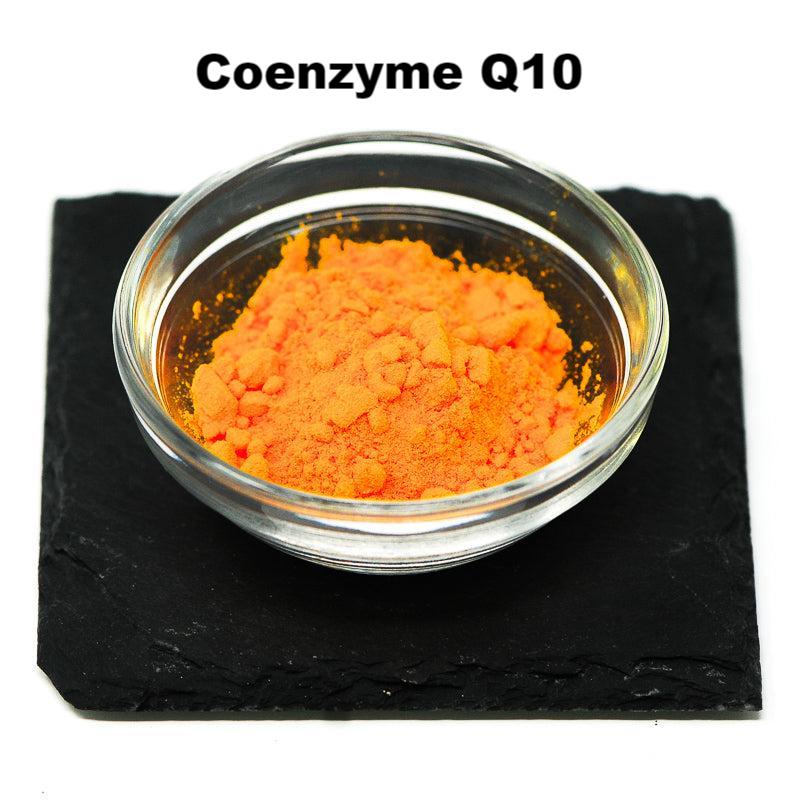
Coenzyme Q10(COQ10): Beneficial to health
Coenzyme Q10 is found everywhere in your body, in almost every cell of your body. Perhaps that’s why it belongs to a class of molecules called ubiquinones. Since CoQ10 is widely distributed in your body, its benefits are widespread.
Q10 helps cells produce the energy your body needs for growth and health. Coenzyme Q10 also acts as an antioxidant, protecting you from damage caused by the energy-making process it is also involved in.
But you can’t rely on your body’s natural production of CoQ10 forever. As you age, its production decreases. Therefore, Q10 is a so-called conditionally necessary nutrient in some cases; and this case is age. Therefore, it is important to maintain optimal levels of CoQ10.
What is COQ10? How much do you know.
Coenzyme Q10: a premium antioxidant
Coenzyme Q10 is a ubiquitous molecule found everywhere in the human body, and that’s good news! Because it acts as a powerful antioxidant. By definition, almost any molecule in your body that releases and accepts electrons acts like an antioxidant.
Excess CoQ10 in your body (those molecules not involved in energy production) can shuttle through various membranes in your body to provide antioxidant protection.
It fights oxidation in your body just like any other antioxidant. Coenzyme Q10 can accept or release electrons to neutralize free radicals. (Similar to its role in electron transfer in energy production), this helps balance the highly reactive by-products of these different processes.
Benefits of using COQ10.
Coenzyme Q10 is one of the important antioxidants that helps protect your cells and body structure. Maintaining adequate concentrations of CoQ10 in your body helps support the proper balance between free radicals and antioxidants (yes, your body actually needs some free radicals to maintain a healthy balance). This is especially important as you get older. Because as you age, oxidative stress and oxidative damage become more common, and your body produces less CoQ10.
Other benefits of Coenzyme Q10 to the human body
Q10 is found everywhere in your body, so it supports overall health, often as an antioxidant. But it’s found in high amounts in some of your body’s hardest-working organs, including the heart, liver, kidneys and pancreas; these are also where metabolism and energy demands are highest.
Industrial Applications & Specifications
Coenzyme Q10 (CoQ10) is a lipid-soluble compound naturally present in the human body, playing a critical role in cellular energy production and as a powerful antioxidant. For commercial applications, it is available in two primary forms, each with distinct characteristics.
Product Forms: Ubiquinone vs. Ubiquinol
The two forms of CoQ10 are fundamentally different in their chemical structure and function, which determines their suitability for various applications.
- Ubiquinone (the oxidized form): This is the most common and stable form used in dietary supplements. It is the form in which CoQ10 is commercially produced and widely available. In the body, it is converted to the active form, ubiquinol, as needed. It is an excellent choice for general wellness supplements and for individuals with normal conversion capacity.
- Ubiquinol (the reduced, active form): This is the active antioxidant form of CoQ10 that does not need to be converted in the body. It is absorbed more readily and is particularly beneficial for older adults or individuals whose ability to convert ubiquinone to ubiquinol may be diminished due to age or certain health conditions. Ubiquinol is often positioned in premium supplement lines targeting specific health concerns.
High-quality CoQ10 for industrial use typically adheres to the following core specifications. All values should be verified with the supplier’s Certificate of Analysis (COA).
- Content (Assay): ≥ 98.0% (determined by HPLC)
- Appearance: Yellow to orange crystalline powder
- Loss on Drying: ≤ 0.5%
- Residue on Ignition: ≤ 0.1%
- Heavy Metals: Compliant with USP standards (e.g., Pb ≤ 10 ppm, As ≤ 2 ppm)
- Related Substances: Meets USP specifications for ubiquinone or ubiquinol
- Particle Size: Typically fine powder for ease of formulation; specifications can be customized.
Application Guidelines
CoQ10 is a versatile ingredient with well-established uses across several industries.
1. Dietary Supplements (Capsules, Tablets, Softgels)
This is the largest and most established application market. CoQ10 is a staple ingredient in cardiovascular health, anti-aging, and energy support formulations.
- Typical Usage Levels: Doses in commercial products typically range from 30 mg to 200 mg per serving. Higher doses (up to 400 mg or more) are used in therapeutic or specialized products.
- Formulation Notes: Due to its lipophilic (fat-soluble) nature, CoQ10 is ideally formulated in oil-based softgels, lipid-based suspensions, or with absorption-enhancing technologies (e.g., with black pepper extract or phytosome delivery systems) to improve bioavailability. Powder blends for reconstitution are also common.
2. Functional Foods & Beverages
CoQ10 is increasingly added to functional foods and beverages, including energy drinks, wellness shots, and fortified snacks.
- Typical Usage Levels: For beverages and foods, typical addition levels range from 2 mg to 20 mg per serving, depending on the product positioning and regulatory guidelines.
- Formulation Notes: For water-based beverages, a water-dispersible or emulsified form of CoQ10 is required to ensure product stability and clarity. It should be added during processing with appropriate mixing to achieve uniform dispersion.
3. Cosmetics & Skincare (Anti-Aging Formulations)
In cosmetics, CoQ10 is valued for its potent antioxidant properties and is used in products targeting mature skin, UV damage, and wrinkle reduction.
- Typical Usage Levels: CoQ10 is typically incorporated into creams, serums, and lotions at concentrations of 0.1% to 0.5%.
- Formulation Notes: It is oil-soluble, so it should be added to the oil phase of the emulsion. To maximize its stability and skin penetration, it is often used with penetration enhancers or in liposomal formulations. Products should be packaged in opaque or light-protective containers to prevent degradation from light exposure.
As we age, how do we supplement COQ10?
Coenzyme Q10 is commonly found in fatty cold-water fish. This is because CoQ10 is fat-soluble. Next time you’re at the market for seafood, choose fatty fish such as tuna, salmon, herring, or mackerel. The American Heart Association recommends eating 5 ounces of cooked, fatty fish at least twice a week. This new staple not only boosts your Q10 levels, but also provides heart-healthy omega-3 fatty acids.
Coenzyme Q10 is not only found in marine proteins, but also in beef and even chicken. But for the same portion, beef provides twice as much CoQ10 as poultry.
Various nuts and seeds also provide significant amounts of CoQ10. While they don’t contain as much as fatty fish and beef, the nut content is still significant. Consider nuts as a midday snack at work, or add some sesame seeds or pistachios to a green salad for extra nutrients.
Among some other vegetable oils, soybean and canola oil provide satisfactory Q10 content. When you go shopping for oils, consider switching to these occasionally to increase the amount of CoQ10 in your system.
After studying here, do you know more about coenzymes?
Welcome to xi’an herb bio to experience more.
Leave A Comment