
Ginseng Extract Overview & Core Active Ingredients
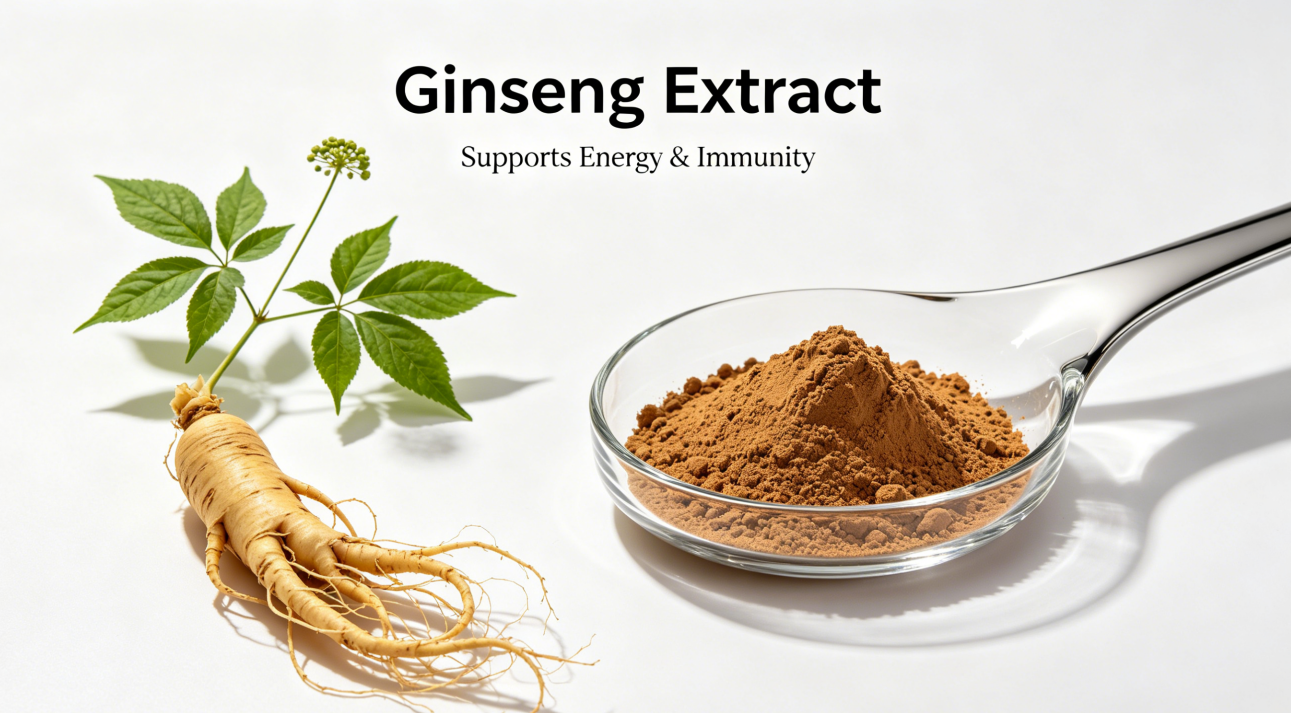
Ginseng extract is a standardized, spray-dried botanical concentrate sourced from Panax ginseng roots, formulated for functional supplement and cosmetic industrial production.
Ginseng naturally includes 11 plant varieties, with Asian ginseng (Panax ginseng) and American ginseng (Panax quinquefolius) being the two most commercially cultivated species for industrial extraction. Unlike crude ginseng root powder, commercial ginseng extract adopts low-temperature purification and solvent removal processes to eliminate excess plant fiber, retaining high-purity functional compounds. Its core active markers are diversified ginsenoside monomers including Rg1, Rb1, Re, and Rg3, alongside ginseng polysaccharides, which are studied for their role in the ingredient‘s functional properties. For high-end clean-label product lines, manufacturers frequently compare organic ginseng extract bulk price to source residue-free, certified organic grades that meet EU and FDA organic compliance standards.
Core Functional Benefits for Commercial Formulations
Understanding research-backed ginseng extract benefits for functional supplements enables formulators to design compliant, market-competitive wellness products with verifiable consumer value. Multiple recent clinical studies have explored ginseng extract’s multi-dimensional functional properties suitable for long-term daily supplementation.
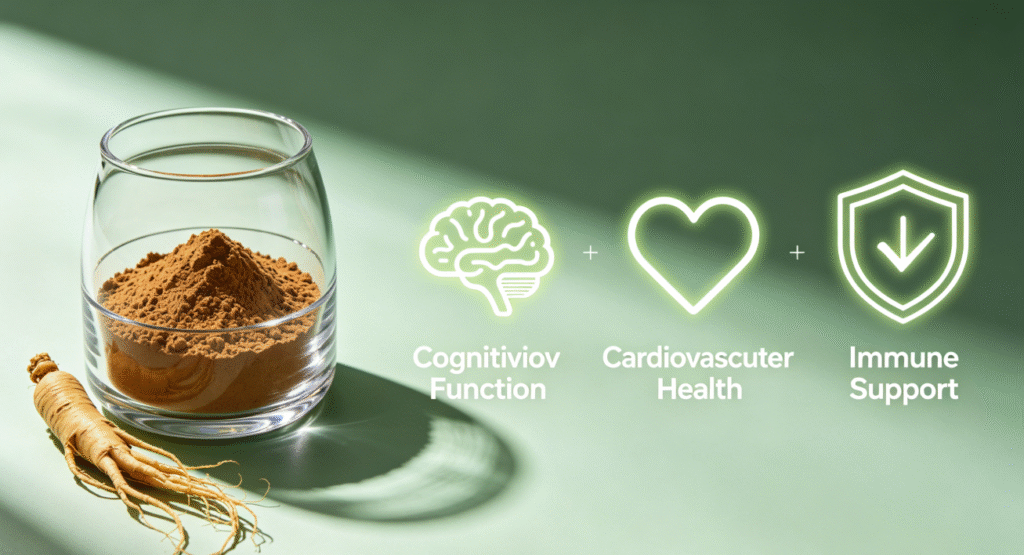
First, it has been studied for anti-fatigue and energy-support effects. A 2023 systematic review found that standardized ginseng formulas were associated with alleviation of chronic fatigue symptoms by improving physical and mental activity, making it a staple ingredient for energy and sub-health conditioning supplements. Second, it has been studied for cognitive health: 2024 clinical research indicates consistent ginseng intake was associated with slower cognitive decline and enhanced memory performance in healthy adults and individuals with mild cognitive impairment.
Additionally, ginsenosides have been studied for their anti-inflammatory properties by regulating key immune inflammatory markers such as interleukin-6 and tumor necrosis factor-alpha, supporting balanced immune function. It has also been studied for glycemic regulation by supporting insulin sensitivity and pancreatic islet cell function, offering mild metabolic support for functional wellness formulas. While most benefits require continuous supplementation for stable results, these studied mechanisms provide scientific support for product labeling and market promotion.
Industrial Applications & Suitable Terminal Dosage Forms
Thanks to its excellent water solubility, mild active properties, and high formula compatibility, standardized ginseng extract covers dual application scenarios for internal functional foods and external cosmetic products.
In the nutraceutical industry, it is widely formulated into oral capsules, chewable tablets, solid beverage powders, and functional energy drinks, targeting fatigue relief, immune maintenance, cognitive care, and metabolic balance consumer demands. In cosmetic manufacturing, fine-mesh, low-impurity ginseng extract serves as a premium antioxidant and anti-aging ingredient. Working with a reliable ginseng wholesale supplier for cosmetics ensures raw materials meet cosmetic-grade purity standards, suitable for addition in anti-aging serums, firming lotions, and antioxidant facial masks to support skin metabolism and resist external oxidative damage.
Compared with crude ginseng powder, standardized extract features stable quality, no sedimentation, and no peculiar odor, effectively improving finished product taste, texture, and shelf stability for commercial mass production.
Technical Specifications & Industrial Quality Standards
Industrial bulk ginseng extract follows unified HPLC detection standards to quantify total ginsenosides, ensuring consistent batch-to-batch quality and global market access qualification. Common commercial specifications include 5%, 10%, and 20% total ginsenosides, with customized high-purity grades available for premium formula needs. Organic grades undergo strict planting and processing control to reduce pesticide residues, heavy metal contamination, and chemical additives, fully complying with clean-label certification requirements.
Professional industrial quality control covers full microbial testing, heavy metal limit detection, and residual solvent screening, meeting FDA food-grade and EU cosmetic-grade safety regulations. The finished powder presents uniform particle size, good fluidity, and strong solubility, adapting to various industrial production processes. Transparent organic ginseng extract bulk price and complete batch test reports including COA and third-party verification data help B2B purchasers control costs and ensure product compliance.
Formulation Stability, Side Effects & Usage Precautions
Standardized ginseng extract boasts good thermal stability, tolerating conventional industrial pasteurization and low-temperature drying processes without significant active ingredient degradation. For storage, sealed, light-proof, and moisture-proof environments are required to avoid powder oxidation and quality attenuation during long-term transportation and warehousing.
Clinically studied as a mild, safe botanical ingredient for daily use, ginseng extract has low reported adverse reaction rates. Rare side effects include occasional insomnia and mild skin discomfort, mostly associated with excessive intake or individual physical differences. It is not recommended for pregnant and lactating groups, infants, and individuals with severe allergic constitutions. In formula matching, ginseng extract should avoid simultaneous high-dose compounding with diabetes medications and blood-thinning drugs to prevent potential ingredient interactions. Scientific dosage control strictly in line with industrial food additive standards supports finished product safety and stability.
How to Select a Reliable Ginseng Extract Wholesale Supplier
Raw material quality directly determines finished product quality, safety, and market reputation. B2B manufacturers need to focus on core indicators when screening ginseng extract suppliers. First, verify standardized testing capabilities: qualified suppliers must support HPLC active ingredient quantification and provide complete COA, MSDS.
Second, confirm batch consistency and stable production capacity to avoid long-term order supply shortages and batch quality fluctuations. Third, prioritize suppliers with organic production qualifications to meet high-end market clean-label demands. Professional suppliers can also provide targeted formula compatibility guidance, helping formulators optimize ingredient ratios and solve stability problems in product development, greatly reducing brand R&D risks.
Ready to try Ginseng Extract for your business? Contact us at info@xianherb.com for a free sample or wholesale price list.
Leave A Comment