
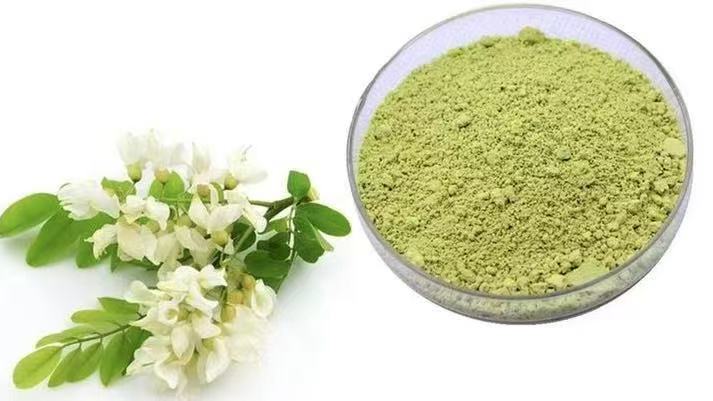
In today’s $270 billion global plant extract market, a low-profile yet high-growth ingredient is quietly emerging—Rutin. Often referred to as the “Guardian of Blood Vessels,” this natural flavonoid compound is creating new market opportunities across pharmaceuticals, healthcare, and cosmetics through its studied vascular support properties. According to Grand View Research, the global rutin market is projected to grow at 8.3% CAGR, reaching $4.6 billion by 2030.
Vascular health concerns affect a significant portion of adults globally, according to WHO data. Rutin—extracted from buckwheat, pagoda tree flowers, and other botanicals—has become an ingredient of interest for formulators due to its studied properties, including supporting capillary resilience, supporting microcirculation, and supporting vascular strength. Critically, production costs for high-purity rutin (≥95%) have dropped significantly due to extraction technology breakthroughs, accelerating commercial adoption.
Three dominant commercialization pathways are driving the market. In pharmaceuticals, a $1.2 billion market, rutin is a studied component in vein comfort products. In nutraceuticals, growing at 15% year over year, it has become a star ingredient in vascular health supplements. In premium skincare, growing at 20% year over year, it is emerging as an “antioxidant powerhouse” in anti-aging formulations. Yet a large portion of this market remains untapped—a strategic window for visionary enterprises.
I. Rutin‘s Origin: From Traditional Remedy to Modern Science
Rutin’s use traces back millennia. In Chinese medicine, Shennong Ben Cao Jing documented pagoda tree flowers for “cooling blood, stopping bleeding, and activating collaterals”—effects now associated with rutin. In European folk medicine, medieval healers used buckwheat extracts for capillary fragility and vein comfort.
Isolated in the early 20th century, rutin is a flavonoid glycoside with triple-action properties. It is studied as an antioxidant for neutralizing free radicals and slowing cellular aging. It is studied as an anti-inflammatory for reducing chronic inflammation markers. And it is studied for vascular support, specifically for decreasing capillary permeability and supporting vascular strength.
II. Rutin Decoded: Core Functions & Natural Sources
The primary sources of rutin, where it is found in highest concentrations, include pagoda tree flowers, buckwheat (especially tartary buckwheat), citrus peels such as orange and lemon, ginkgo leaves, and green tea.
Rutin‘s properties can be grouped into four pillars. First, for vascular support, it is studied for strengthening capillaries and supporting vein comfort, as well as for improving microcirculation. Second, for antioxidant and anti-aging applications, it is studied for fighting oxidative stress in skin and cellular systems, and for anti-wrinkle properties in cosmetics. Third, for anti-inflammatory and immunity applications, it is studied for easing chronic inflammation and for modulating immune response. Fourth, for collagen synthesis, it is studied for supporting skin elasticity and for supporting vascular strength.
III. Rutin’s Cross-Industry Impact
In pharmaceuticals, rutin‘s role goes beyond ancillary use. It is studied in vein comfort products for reducing edema and pain via capillary support. It is studied in antithrombotic research for mild platelet inhibition. It is also studied in ophthalmic research for managing diabetic retinopathy. One case study showed that a pharma firm’s rutin-based gel demonstrated 75% symptom improvement in trials.
In nutraceuticals, rutin has become a preventive health gold. It is used in cardiovascular formulas, where it synergizes with Vitamin C for elasticity. It is used in antioxidant supplements, where it is studied for fighting cellular aging. It is also used in sports nutrition, where it is studied for supporting post-exercise recovery. One case study showed that “Rutin + Vit C” supplements achieved 200% sales growth.
In cosmetics, rutin functions as a triple-action active. It is used in anti-aging serums, where it is studied for countering free radical damage. It is used in brightening products, where it is studied for inhibiting melanin. It is also used in sun care, where it is studied for enhancing UV resistance. One case study showed that a Korean “Overnight Rescue Cream” with rutin hit a 40% repeat rate.
In functional foods, rutin supports wellness integration. It is used in rutin-enriched buckwheat snacks with a “vascular-supportive” positioning. It is used in health beverages, where it is studied for supporting antioxidant capacity. It is also used in meal replacements to add bioactive value. One case study showed that “Rutin Crisps” captured premium retail shelves in 3 months.
IV. High-Purity Rutin: The Efficiency Multiplier
Compared with crude extracts, ≥95% purity delivers several advantages. It provides higher bioactivity, which supports enhanced quality and customer satisfaction. It allows for reduced dosage, which lowers formulation costs and supports higher margins. It also ensures batch consistency, which streamlines mass production.
The proven ROI is compelling. A European skincare brand reported 30% higher antioxidant efficacy and 50% fewer complaints. A nutraceutical manufacturer reported 20% higher production efficiency and 15% less waste.
V. Seize Your Rutin Opportunity
Whether developing next-gen vascular health solutions or creating antioxidant skincare, rutin offers natural, safe, and multi-functional properties. It offers demonstrated cost-performance advantages. And it offers first-market advantage in untapped segments.
Act now to lead the $4.6 billion market. We offer high-purity rutin ranging from 70% to 98%, custom formulation support, and end-to-end OEM/ODM solutions.
Ready to try Rutin for your business? Contact us at info@xianherb.com for a free sample or wholesale price list.
Leave A Comment