
Project Description

Product Description
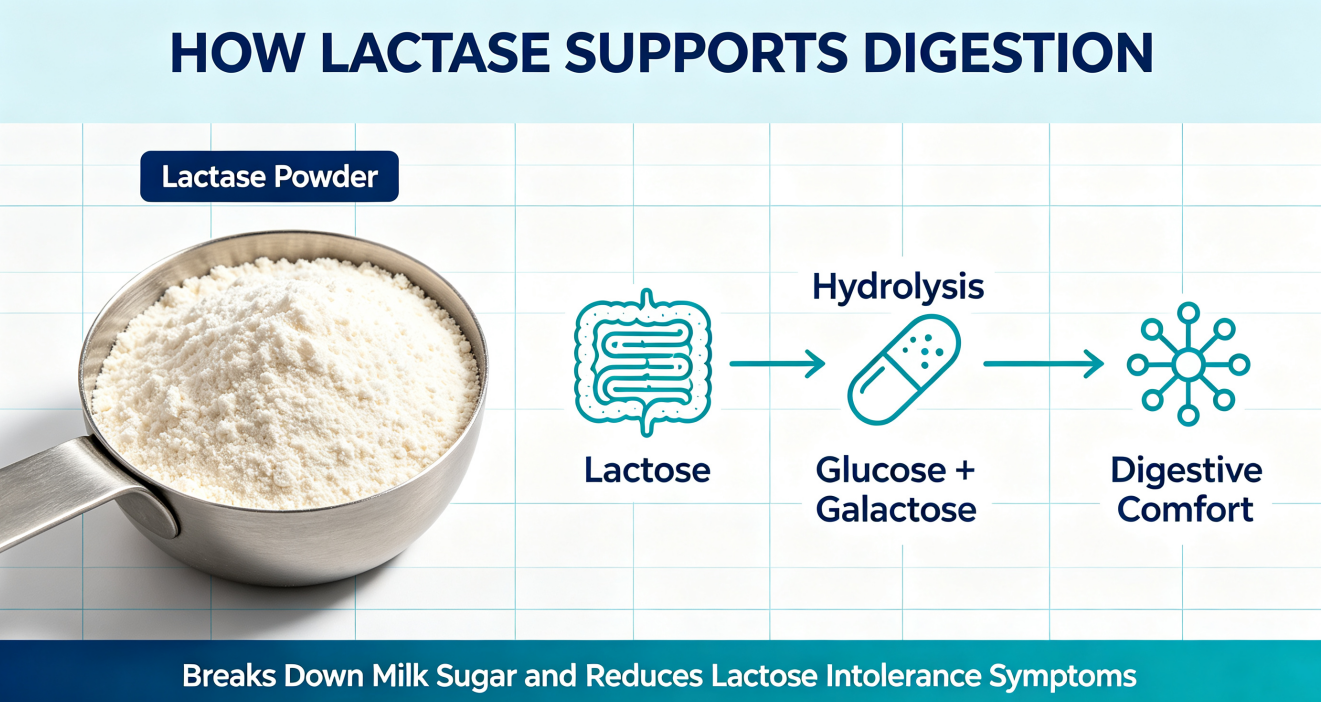
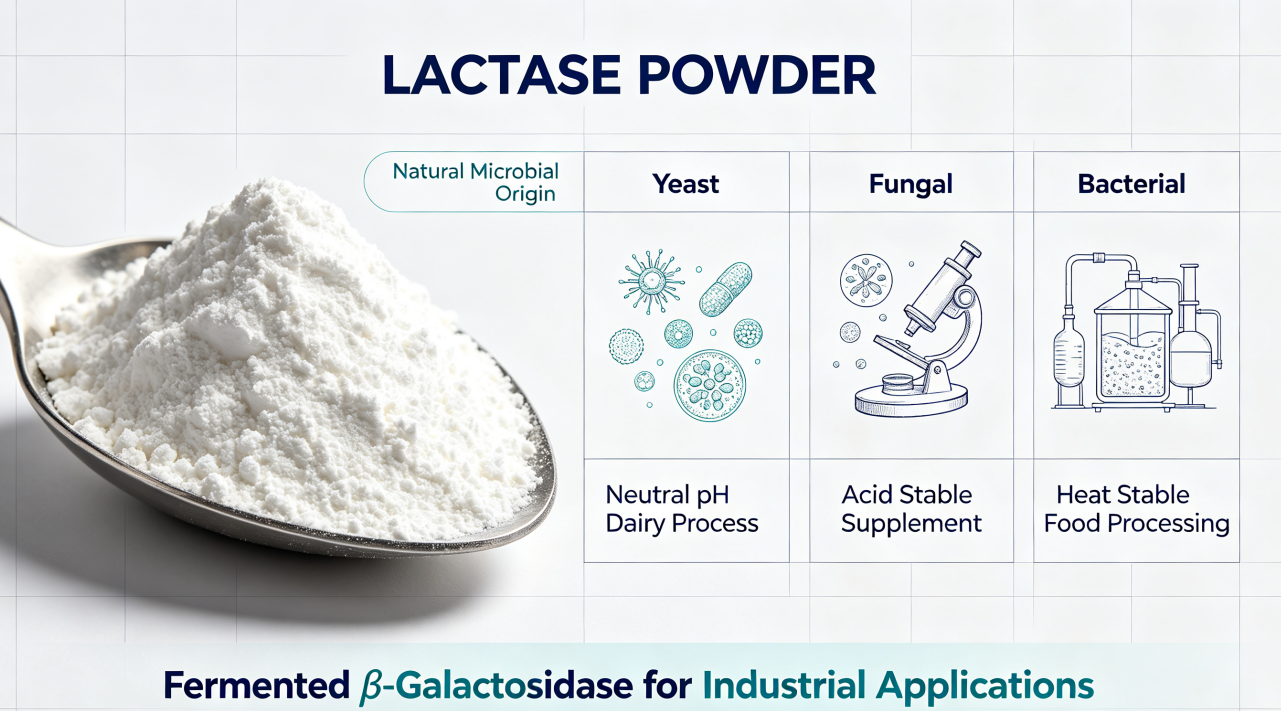
Lactase is a digestive enzyme that hydrolyzes lactose, the sugar found in milk and dairy products, into absorbable glucose and galactose. It is available in three mainstream industrial strains—yeast-derived (Kluyveromyces lactis), fungal-derived (Aspergillus oryzae / Aspergillus niger), and bacterial-derived—each with distinct pH and temperature profiles for different application scenarios.
The product is designed for lactose-free dairy manufacturing, digestive health dietary supplements, and processed food applications. It is valued by formulators for its strain-specific stability, adjustable enzyme activity (5,000–100,000 ALU/g), and clean-label compliance (microbial fermented, no chemical hydrolysis).
Core Functional Benefits
1.Lactose-Free Dairy Manufacturing
Usage: UHT lactose-free milk, pasteurized fresh milk, drinking yogurt, plant-dairy blended beverages, infant formula.
Recommended addition: 0.1%–0.5% (based on 10,000 ALU/g enzyme activity) for 95%+ lactose degradation. Yeast-derived lactase matches the natural neutral pH of raw milk and is suitable for low-temperature inline hydrolysis without damaging milk protein. Final product lactose content ≤0.1 g/100 mL, meeting EU lactose-free labeling standards.
2.Digestive Health Dietary Supplements
Usage: Immediate-release tablets, chewable tablets, enteric-coated capsules, oral drops, digestive enzyme complex powders.
Recommended addition: 5,000–10,000 ALU per serving for oral digestive supplements. Acid-resistant fungal lactase is stable at gastric pH 2.0–3.0, delivering high activity to the small intestine. Compatible with protease, amylase, and probiotics.
3.Processed Food & Industrial Whey Utilization
Usage: Dairy protein bars, baked pastries, meal replacement powders, whey protein isolates, frozen desserts.
Recommended addition: 0.1%–1.0% depending on application. Bacterial and fungal lactase tolerate extrusion and baking conditions (e.g., retains 70% activity after 185°C short-time baking), suitable for complex solid matrix applications.
Core Classification & Source Differentiation
The source of lactase determines its working environment, stability, and applicable scenarios. We provide three mainstream industrial strains with clear application positioning for your formula selection.
Yeast-Derived Lactase (Kluyveromyces lactis)
- Biochemical Characteristics: Neutral pH optimum (pH 6.0–7.0), optimal temperature 35–40°C; active under dairy natural pH conditions
- Core Advantages: Excellent solubility in raw milk; mild reaction, no bitter byproducts; high hydrolysis rate for liquid dairy
- Best For: Industrial production of lactose-free liquid milk, UHT milk, fresh yogurt, and pasteurized dairy beverages
- Application Case: Continuous inline hydrolysis for 200,000L/day low-lactose milk production, achieving 95%+ lactose degradation without changing original milk flavor
Fungal-Derived Lactase (Aspergillus oryzae / Aspergillus niger)
- Biochemical Characteristics: Acidic pH optimum (pH 4.5–5.5), high temperature tolerance (50–60°C); strong acid resistance
- Core Advantages: Resists gastric acid degradation, maintains high activity in the stomach; high thermal stability for post-processing; ideal for whey hydrolysis
- Best For: Oral digestive supplements, acidic fermented dairy, whey upgrading, high-temperature processed dairy foods
- Application Case: Added to enteric-coated lactase tablets, remaining 85% active after passing through gastric juice, ensuring targeted small-intestine digestion effect
Bacterial-Derived Lactase
- Biochemical Characteristics: Broad pH adaptation range, ultra-high thermal stability, low-cost large-scale fermentation
- Core Advantages: Cost-effective; stable during high-temperature baking and extrusion processing; suitable for complex solid matrix
- Best For: Dairy-based baked goods, meal replacement powder, extruded nutritional bars, bulk industrial whey processing
- Application Case: Incorporated into high-protein baked bars, retaining 70% enzyme activity after 180°C baking, eliminating lactose-induced flatulence in finished products
Industry Application & Verified Cases (By Source)
Lactose-Free Dairy Manufacturing (Core Track: Yeast Lactase)
Yeast-derived lactase matches the natural neutral pH of raw milk, the mainstream choice for commercial low-lactose dairy lines.
- Applicable Products: UHT lactose-free milk, pasteurized fresh milk, drinking yogurt, plant-dairy blended beverages, infant formula
- Process Advantage: Low-temperature inline hydrolysis, no damage to milk protein; maintains original flavor and nutritional value
- Verified Case: Cooperated with a European dairy factory, using K. lactis lactase for continuous hydrolysis; final product lactose content ≤0.1g/100mL, fully meeting EU lactose-free labeling standards
Digestive Health Dietary Supplements (High-Margin Track: Fungal Lactase)
Acid-resistant fungal lactase is the gold standard for oral supplements, solving the failure of neutral lactase deactivated by stomach acid.
- Applicable Dosage Forms: Immediate-release tablets, chewable tablets, enteric-coated capsules, oral drops, digestive enzyme complex powders
- Formulation Advantage: Stable at gastric pH 2.0–3.0, delivers high activity to the small intestine; compatible with protease, amylase and probiotics
- Verified Case: A US nutraceutical brand adopted our A. oryzae lactase for chewable tablets; in-vivo test shows 82% enzyme retention after gastric transit, significantly improving consumer dairy tolerance feedback
Processed Food & Industrial Whey Utilization (Cost-Effective Track: Bacterial & Fungal)
- Applicable Products: Dairy protein bars, baked pastries, meal replacement powders, whey protein isolates, frozen desserts
- Process Advantage: High thermal stability tolerates extrusion and baking; fungal lactase improves whey hydrolysis efficiency for byproduct upgrading
- Verified Case: Used in high-protein baked snacks, retains 70% activity after 185°C short-time baking, eliminating lactose-induced digestive discomfort in fitness population
Complete Technical Specifications
| Specification Item | Yeast (K. lactis) | Fungal (A. oryzae) | Bacterial |
| Enzyme Activity | 10,000 ALU/g – 50,000 ALU/g | 10,000 ALU/g – 100,000 ALU/g | 5,000 ALU/g – 50,000 ALU/g |
| Optimum pH | 6.0 – 7.0 (Neutral) | 4.5 – 5.5 (Acidic) | 5.0 – 7.5 (Broad) |
| Optimum Temperature | 35 – 40°C | 50 – 60°C | 45 – 65°C |
| Form | White Powder / Clear Liquid | Off-white Fine Powder | Yellowish Powder |
| Mesh Size | 80 / 100 / 200 Mesh | 100 / 200 Mesh | 80 Mesh |
| Moisture | ≤6.0% | ≤5.0% | ≤6.0% |
| Heavy Metals (Pb) | ≤1.0 ppm | ≤1.0 ppm | ≤1.0 ppm |
| Total Plate Count | ≤500 cfu/g | ≤300 cfu/g | ≤500 cfu/g |
| Pathogens | Negative (Salmonella/E.coli) | Negative | Negative |
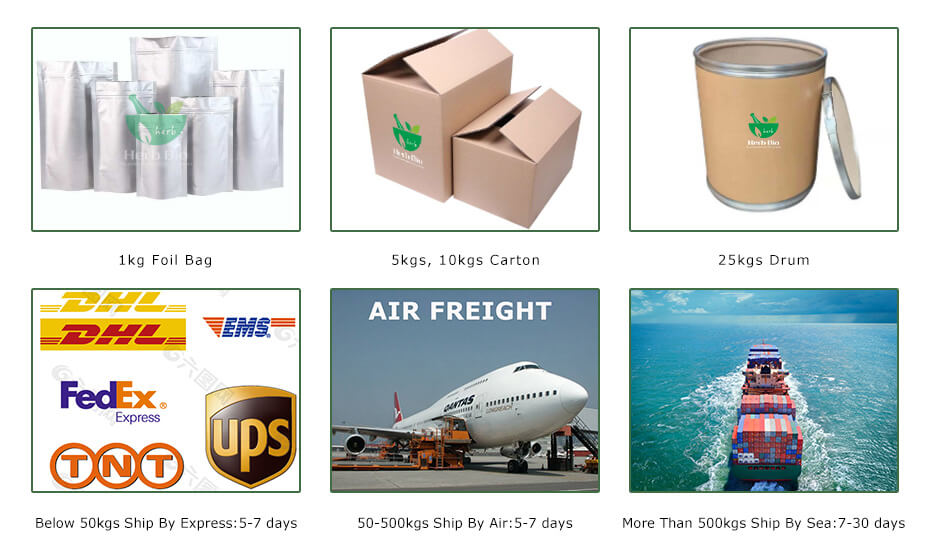
Packing & Shipping
Our B2B Supply Advantages
-
Full Strain Portfolio: Complete yeast/fungal/bacterial lactase series, one-stop selection for dairy and supplement clients
-
Custom Activity & Mesh: Adjustable enzyme activity (5,000–100,000 ALU/g) and particle size for different dosage forms
-
Global Compliance Documents: Complete COA, microbial reports, non-GMO statements, HALAL/KOSHER/GRAS filings for customs clearance
-
Professional Technical Support: Provide formula dosage simulation, process parameter optimization, and customer case reference data
-
Stable Bulk Capacity: Annual fermentation output over 200 tons, supporting long-term framework orders without stockout risk
Located in China, if you purchase from us,we offer many additional convenient services, all of which cannot be easilly provided by other ingeredient products suppliers. Welcome to contact us to get FREE SAMPLE, COA and Nutrition Facts!
Hot Tags:Lactase,Lactase Enzyme,Lactase Supplement,Lactose Intolerance,Digestive Enzymes,Chinese manufacturers, suppliers, factory, wholesale, for sale, bulk




Leave A Comment